
Small House Exterior Paint Ideas That Make a Big Difference
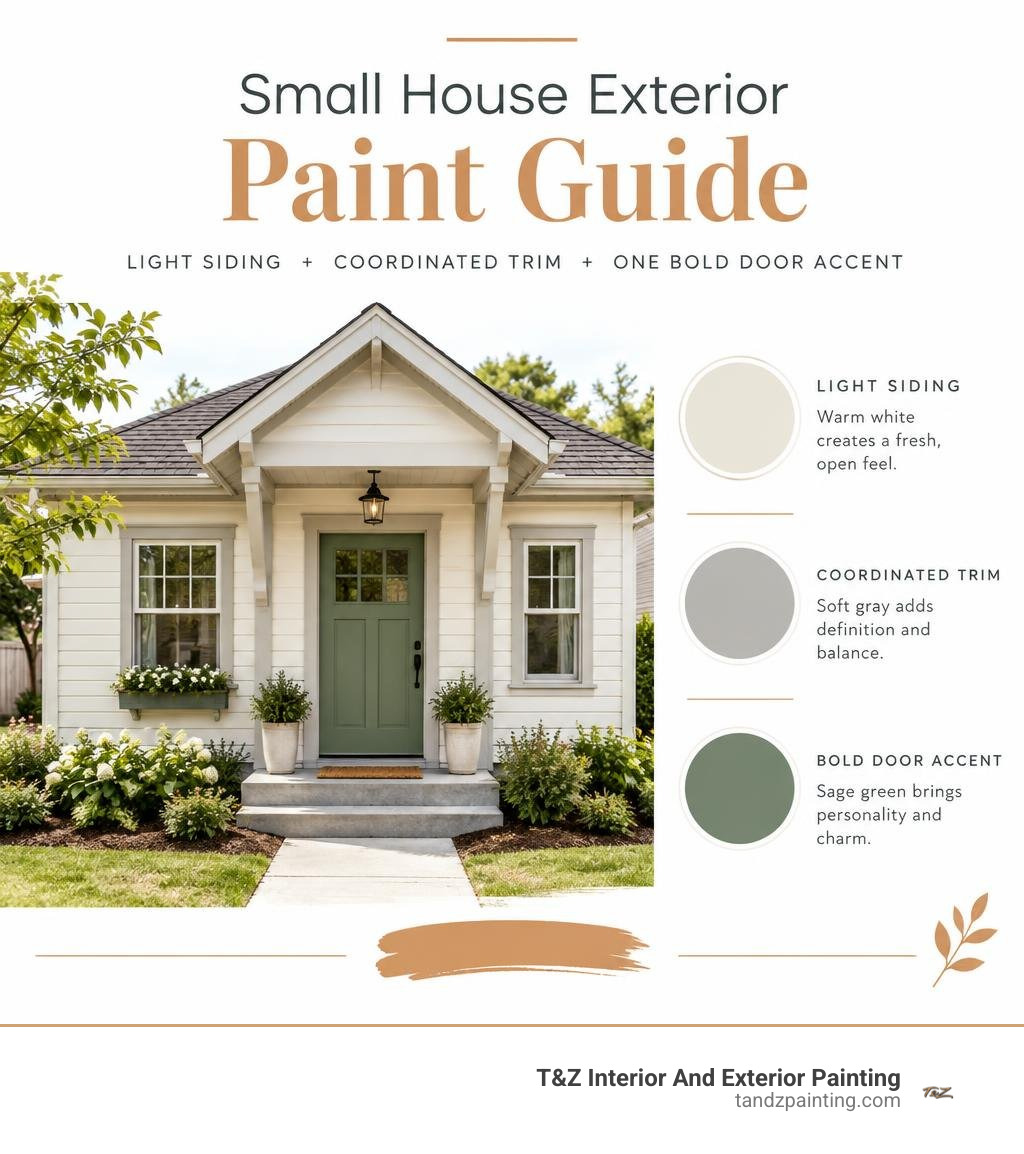
A good paint design for the outside of a small house keeps the main color simple and uses accents with care. Try warm white siding with soft gray trim and a sage green door, or light greige siding with cream trim and a deep blue door. Light colors can help a compact home look more open, while a darker door or trim can draw attention to its best features.
I’m Tomasz Niemotko, founder of T&Z Interior And Exterior Painting, a licensed and insured painting contractor founded in 2009 and based in Lombard. With over 15 years of experience, I help homeowners plan a small house paint design outside that suits their home’s style, light, and surroundings.
Small house paint design outside terms explained:
- exterior paint colors for small cottage
- exterior painting compact houses
- house painting colors outside
Proven Principles for a Small House Paint Design Outside
Designing an exterior scheme for a compact home requires a balance between scale, visual weight, and proportion. When working with smaller elevations, busy color schemes with too many competing shades can quickly chop up the facade and make the building look crowded. Instead, applying proven design rules ensures your home feels cohesive, structured, and welcoming.

A reliable framework is the 60-30-10 color rule:
- 60% Primary Body Color: This covers your main siding, stucco, or brick walls, establishing the overall tone and visual presence of the house.
- 30% Secondary Trim Color: This coats window casings, fascia boards, soffits, corner boards, and porch railings, framing the architectural lines.
- 10% Accent Color: This is reserved for focal points like the front door, decorative shutters, or custom architectural brackets.
Choosing the right base family shapes how sunlight interacts with your siding. Homeowners looking for inspiration often explore cute cottage vibes and the best exterior paint colors for small homes to understand how subtle tonal shifts alter curb appeal.
| Color Family | Visual Impact on Small Homes | Maintenance & Longevity | Best Architectural Pairing |
|---|---|---|---|
| Warm Off-Whites & Creams | Maximizes light reflection, expands visual boundaries | Shows splashback dirt near soil; high UV resistance | Cottages, Farmhouses, Cape Cods |
| Light Greige & Taupe | Grounded and soft without flattening architectural depth | Excellent dirt-masking; steady color retention | Ranches, Split-Levels, Craftsman |
| Earthy Sage & Muted Green | Blends seamlessly into tree-lined yards, calming presence | Hides pollen and dust; moderate fading resistance | Bungalows, Mountain Cabins, Ranches |
| Deep Charcoal & Navy | Dramatic, recedes into greenery, highlights crisp trim | Absorbs heat; requires premium UV-resistant paint | Modern Minimalist, Modern Craftsman |
Using Light and Neutral Colors to Maximize Visual Space
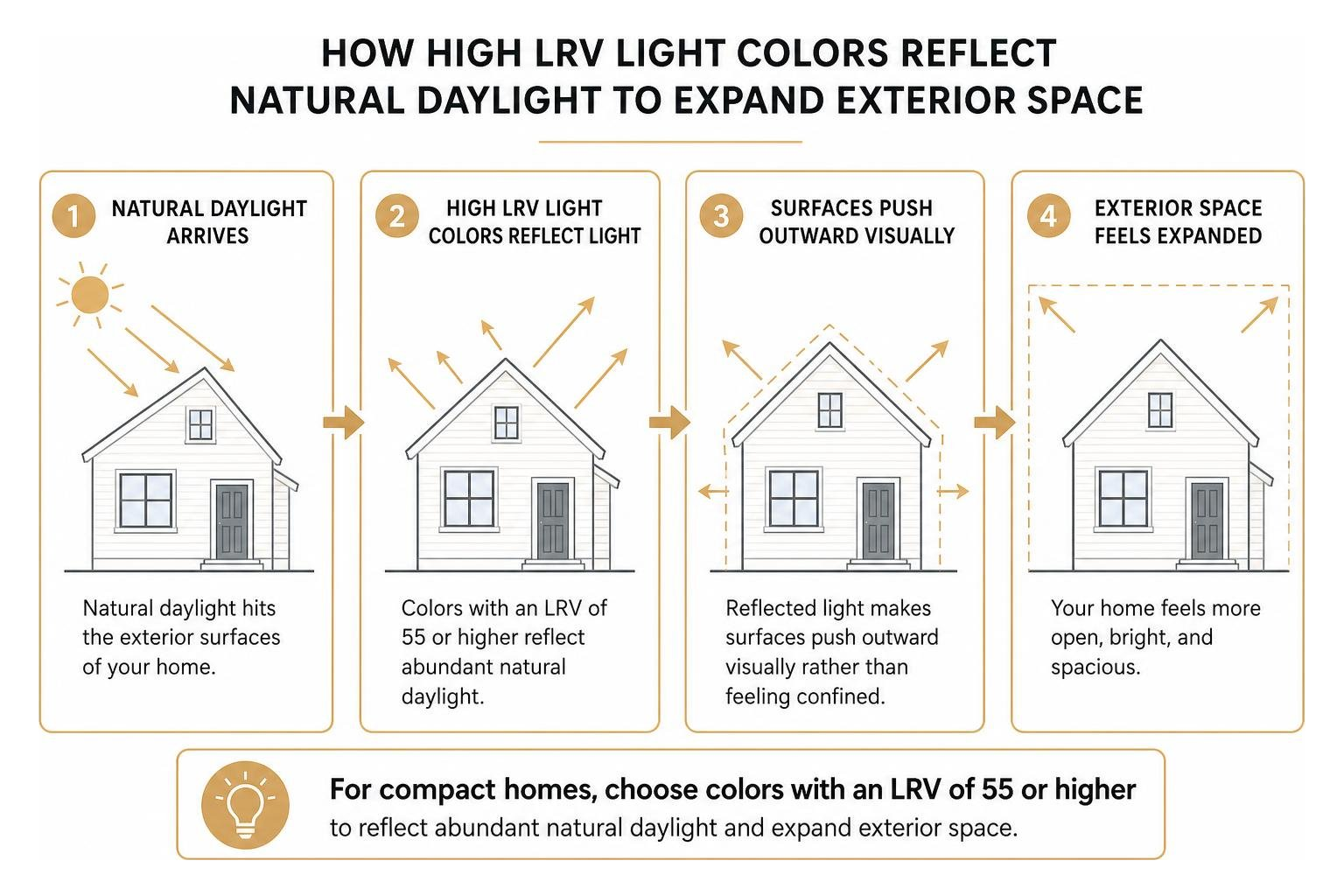
Light Reflectance Value (LRV) measures the percentage of visible light a paint color reflects on a scale from 0 (absolute black) to 100 (pure white). For compact homes, colors with an LRV of 55 or higher reflect abundant natural daylight, helping surfaces push outward visually rather than feeling confined.
Popular shades curated in 14 Exterior House Colors & Inspiration | Benjamin Moore highlight how soft whites, pale grays, and warm off-whites bounce light across exterior walls. Warm greiges and creamy off-whites avoid the harsh, sterile glare that stark pure whites can produce under direct midday sun. In shaded environments, these pale tones illuminate recessed porches and roof eaves, eliminating heavy shadow lines that make a small footprint feel closed in.
Highlighting Architectural Trim and Siding Features
Strategic trim placement defines the boundaries of your house and directs the viewer’s eye along its architectural lines. When window casings, corner boards, and fascia boards receive a crisp, coordinating color, they provide structural definition without cluttering the facade.
For homes with mixed cladding, such as horizontal lap siding paired with vertical board-and-batten gables, subtle tonal shifts give dimension to the walls. You can find practical concepts in these 5 exterior accent ideas for small houses, where painting gables or porch posts one shade lighter or darker creates depth without breaking the home’s overall visual flow.
Trending Exterior Color Schemes for Compact Homes in 2026
Exterior design trends in 2026 have moved away from cold, stark grays toward warm, nature-inspired palettes that ground the home in its surroundings. Homeowners are embracing organic modernism, blending warm stone tones, soft mossy greens, and rich clay accents for timeless, inviting curb appeal.
As featured in 29 Exterior House Colors That Will Add Major Curb Appeal In 2026 | Architectural Digest, natural palettes offer warmth and sophistication without overpowering smaller streetscapes. Combining these hues thoughtfully allows you to create classic outside house painting color combinations that remain stylish through changing seasons.
Inspiring Palettes for a Small House Paint Design Outside
Different architectural styles call for tailored palettes that honor their unique structural details:
- Craftsman Bungalow: Muted olive or sage green siding, warm cream trim, and an earthy terracotta or rich cedar-stained front door.
- Coastal Cottage: Soft ocean blue or pale mist gray siding, crisp white trim, and a sunny pale yellow or navy door.
- Modern Minimalist: Light warm gray body, tonal slate trim around window sashes, and a matte black entrance door for clean lines.
- Modern Farmhouse: Soft off-white vertical siding, warm greige window frames, and a muted forest green or rich walnut front door.
Local neighborhoods across the western Chicago suburbs often feature distinctive mid-century ranches, historical cottages, and classic bungalows. Homeowners planning exterior house painting in Lombard IL often lean into these warm, balanced palettes to maintain neighborhood harmony while letting their home stand out naturally.
Balancing Bold Accents and Dark Tones Without Shrinking the Footprint
Dark exterior paint does not have to be off-limits for smaller houses. When used with intention, deep charcoal, navy, or dark olive tones cause exterior walls to visually recede into surrounding trees and gardens, drawing attention to architectural details.
To keep a dark body from feeling heavy or enclosed, use high-contrast, light-colored trim around rooflines and window openings to frame the facade. Alternatively, if you prefer a light body color, you can introduce neutral house paint ideas that are anything but boring by pairing warm stone walls with dark charcoal window sashes, rich black shutters, or a deep plum front door.
Selecting the Right Sheen and Protective Coating for Siding
Paint sheen affects both how color appears in natural light and how well the surface resists moisture, dirt, and UV degradation. Using the correct sheen for each exterior component ensures your finish remains durable over time.

- Flat / Matte: Best for older siding with minor surface flaws, but less resistant to scrubbing and moisture.
- Low Lustre / Satin: The standard choice for main siding materials, including wood lap siding, vinyl, fiber cement, and stucco. It offers a soft sheen that sheds water and dirt easily without highlighting surface unevenness.
- Semi-Gloss: Ideal for trim, shutters, window frames, and decorative millwork. It provides moisture protection and makes architectural borders pop.
- High Gloss: Best reserved for front doors and select hardware accents, offering maximum impact and easy cleaning.
To choose the best finish for each surface, review our guide to the best exterior gloss paint and sheens.
Coordinating Fixed Materials with Paint Undertones
A small home’s exterior color scheme must coordinate with permanent, unpainted materials like brick foundations, stone chimneys, concrete walkways, and roof shingles. Clashing undertones can make the exterior feel disjointed.
- Warm Fixed Features: Red or brown brick, tan stone, and brown roof shingles pair best with warm off-whites, creamy beiges, olive greens, and warm earth tones.
- Cool Fixed Features: Slate gray shingles, blue-gray flagstone, and cool poured concrete coordinate well with crisp whites, slate blues, and soft charcoal neutrals.
Properly assessing these undertones ensures your chosen palette forms a unified look with affordable house painting solutions that keep your siding protected against harsh Midwest weather cycles.
Testing Your Small House Paint Design Outside Before Painting
Exterior paint colors always appear significantly lighter and more vibrant outdoors under direct sunlight than they do on an indoor paint swatch. Testing colors on-site is an essential step before purchasing full quantities.
- Paint Large Sample Boards: Apply two coats of your shortlisted colors onto 2×2-foot foam boards or directly onto inconspicuous siding areas.
- Move Around the House: Position the sample boards along north-, south-, east-, and west-facing elevations to observe light shifts.
- Check Different Times of Day: View the boards during morning light, midday sun, and overcast late afternoons.
Timing your test and project application correctly is just as important. Understanding when is the best time to paint the exterior of your home helps ensure temperatures and humidity levels support proper paint curing and lasting adhesion.
Frequently Asked Questions About Small House Exterior Painting
What exterior paint colors make a small house look bigger?
Lighter colors with a high Light Reflectance Value (LRV), such as warm off-white, light greige, soft cream, and pale sage, make a small home appear larger. These tones reflect daylight and expand visual sightlines. Painting trim in the same color family or a slightly lighter shade creates continuous lines that make the house look taller and wider.
How many paint colors should be used on a small house exterior?
Most small house exteriors look best with no more than three colors: one dominant body color (roughly 60% of the surface area), one coordinating trim color (roughly 30%), and one accent shade for the front door or shutters (roughly 10%). Using four or more colors on a compact home can fragment the facade and make it appear cluttered.
Can dark paint colors work on small house exteriors?
Yes, dark colors like charcoal, deep navy, and forest green can look striking on small homes. Dark siding recedes into natural landscaping, giving the home a grounded, cozy feel. To keep the house from looking small or flat, pair dark siding with crisp, contrasting trim around the roofline and windows, and add warm exterior lighting to accentuate key focal points.
Conclusion
Transforming your home’s exterior with a carefully planned color scheme improves curb appeal while protecting siding and trim from the elements. Whether you choose an airy warm neutral, an earthy sage green, or a dramatic charcoal accent, balancing light, scale, and undertones brings out the best in compact architecture.
At T&Z Interior And Exterior Painting, we bring over 15 years of hands-on experience to every project. Founded in 2009 by Tomasz Niemotko, our team delivers high-quality residential painting backed by thorough surface preparation, top-brand materials, and clean finishes. We are a fully licensed and insured, BBB-accredited painting contractor holding a 5.0 Google rating across 85+ reviews, and we stand behind our workmanship with a 2-year warranty.
We proudly serve homeowners across Lombard, Glen Ellyn, Villa Park, Oak Brook, Oakbrook Terrace, Downers Grove, Wheaton, Elmhurst, Addison, Itasca, Roselle, Bloomingdale, Carol Stream, Wood Dale, Westmont, Bensenville, Berkeley, Hillside, Schiller Park, Glendale Heights, Schaumburg, and Chicago. If you are ready to address small house painting challenges and refresh your home, request a free estimate on tandzpainting.com or call our local team today at (224) 240-0054.