
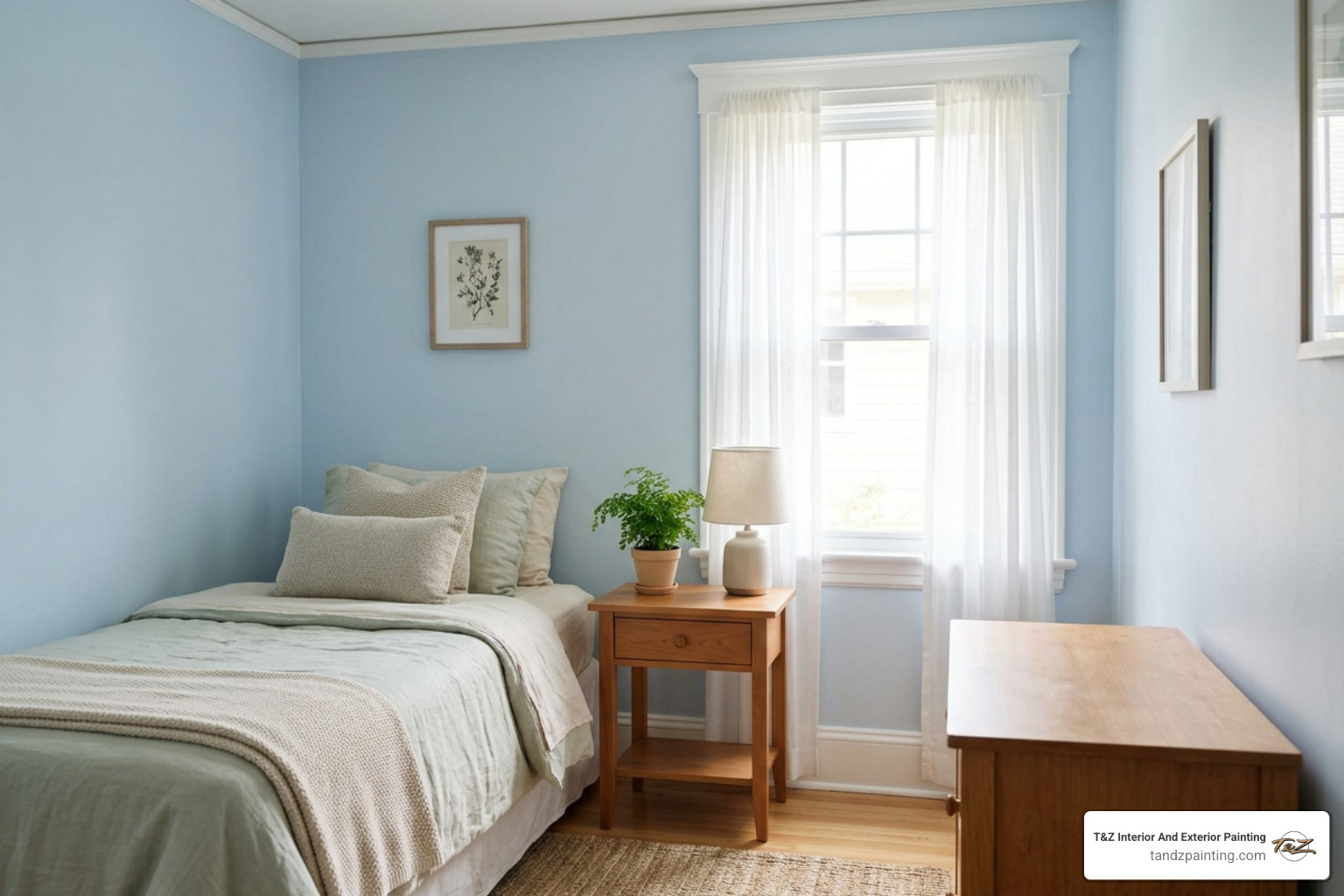
Top Calming Colors for Small Bedrooms by Color Family
Selecting the right hue involves balancing spatial perception, Light Reflectance Value (LRV), and principles from color psychology. Muted shades reflect light smoothly without causing eye strain, helping compact walls feel less restrictive while signaling the parasympathetic nervous system to slow down and relax. Choosing thoughtfully tuned hues establishes a tranquil sanctuary where mind and body can reset effortlessly after a demanding day.
Muted Greens and Earthy Sage Tones
Sage greens and soft thyme shades bring a grounded, biophilic connection into the home interior. Because green sits directly at the center of the visible color spectrum, it is uniquely gentle on the eyes and natural for encouraging physical rest.
- Light Thyme (SW 6187): A balanced green with faint gray undertones. With a mid-range reflectivity, it delivers an organic feel without darkening a tight footprint or making adjacent corners feel enclosed.
- Laurel Woods (SW 6187): A richer, deeper earthy green containing subtle gray and brown undertones. Used thoughtfully, it creates an inviting, forest-inspired accent wall behind a headboard that anchors the space visually.
If you are planning a broader residential update, check out our insights on how to choose colors for your master bedroom painting project to harmoniously connect your primary suite palette.
Tranquil Blues and Blue-Gray Blends
Blues are naturally associated with serenity, lower heart rates, and healthy human biological rhythms. In small bedrooms, blue-gray blends prevent the space from feeling like a cold, clinical box while maintaining visual airiness.
- Meditative (SW 6227): A soothing blue-gray enhanced by quiet lavender undertones. It offers a softer, more intimate feel than standard industrial grays, providing subtle depth to cozy sleeping quarters.
- Sleepy Blue (SW 6225): Featuring a Light Reflectance Value (LRV) of 58, this soft hue sits in the ideal sweet spot for light reflection. It bounces natural daylight across small walls while maintaining a serene backdrop for rest.
Soft Neutrals and Warm Earth Tones
Neutrals provide a clean slate that visually expands wall boundaries without feeling sterile. Warm off-whites and balanced greiges prevent small bedrooms with limited windows from feeling gloomy or shadowy during twilight hours.
- Warm Off-Whites & Greiges: Colors with delicate yellow or taupe undertones blanket tiny rooms in gentle warmth without the harsh glare of stark builder white.
- Copper Harbor (SW 7701): A rich, warm earth tone blending copper and brown. Applying this shade as a single feature wall adds cozy, cocooning depth without overwhelming the rest of the bedroom layout.
To discover how cohesive color selections improve overall well-being and rest, read the ultimate guide to beautiful bedroom colors paint your way to better sleep.
Gentle Pinks and Soft Violets
Earthy blushes and subtle cool violets bring unexpected warmth and sophistication to compact quarters. Gentle shades like muted dusty rose or celestial violet reflect soft ambient light, offering a comforting retreat that feels both stylish, spacious, and deeply serene.
How Lighting and Paint Finishes Impact Small Bedroom Tranquility
A paint shade that looks ethereal on a store swatch can look completely different on a bedroom wall if natural daylight and interior sheens are overlooked during the planning stage.
How Lighting Changes Calming Colors for Small Bedrooms
Lighting alters how subtle undertones present themselves throughout the day, directly influencing the atmosphere of compact spaces:
- North-Facing Windows: Northern light is naturally cooler and bluer. Warm neutrals, muted blush tones, or soft sage greens offset cold shadows and maintain an inviting ambience.
- South-Facing Windows: Direct, golden sunlight intensifies wall paint. Cool blues and blue-grays maintain their calming freshness under intense midday light without feeling washed out.
- Artificial Bulbs: For healthy sleep hygiene and maintaining your natural circadian rhythm, select warm LED bulbs in the 2700K–3000K range. Overhead fixtures emitting cool white light above 4000K can interfere with melatonin production and make tranquil paint colors look harsh and clinical.
For detailed advice on pairing colors under different room lighting conditions, review our guide on stunning two color combinations for your bedroom walls.
Selecting the Right Sheen: Matte vs Eggshell vs Satin
Selecting the appropriate paint finish directly impacts visual space perception and daily room maintenance:
- Matte Sheen: Diffuses light evenly across wall surfaces, effectively hiding surface imperfections and eliminating distracting reflections. However, pure matte can be more challenging to wipe down in high-touch compact areas.
- Eggshell Finish: Provides a low-glare appearance paired with practical washability. It reflects just enough light to open up a compact bedroom while resisting scuffs and everyday wear.
- Satin Finish: Highly durable and easy to wipe clean, but its higher luster can emphasize minor drywall unevenness and reflect artificial lights sharply in small, tight spaces.
To learn more about choosing the best sheen for your project, explore our guide on demystifying paint finishes and how to choose the right sheen for every room.
Designing a Mindful Sanctuary: Decor, Schemes, and Layout Tips
A calming paint shade works best when paired thoughtfully with your room’s overall furniture layout, ambient textiles, and decorative accent choices.
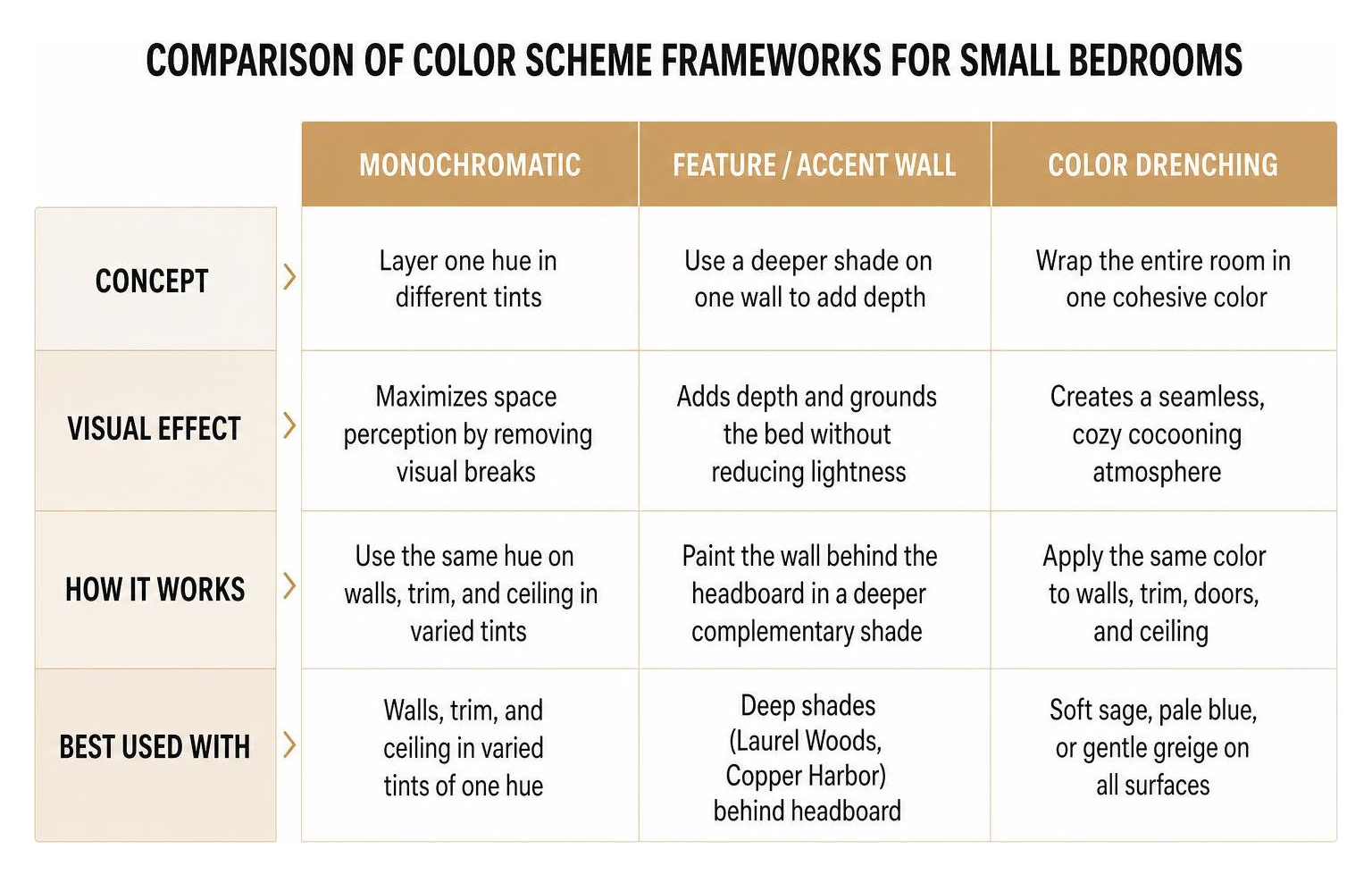
| Color Scheme Style | Small Bedroom Visual Effect | Best Used With |
|---|---|---|
| Monochromatic | Maximizes space perception by removing visual breaks | Walls, trim, and ceiling in varied tints of one hue |
| Feature / Accent Wall | Adds depth and grounds the bed without reducing lightness | Deep shades (Laurel Woods, Copper Harbor) behind headboard |
| Color Drenching | Creates a seamless, cozy cocooning atmosphere | Soft sage, pale blue, or gentle greige on all surfaces |
Complementary Color Schemes for Compact Bedrooms
- Monochromatic Schemas: Painting trim, baseboards, and walls in soft variations of the same hue eliminates harsh horizontal breaks, making low ceilings feel taller and tight walls feel expansive.
- Feature Accent Walls: Applying a richer shade behind the headboard draws the eye to a single grounded focal point, while lighter adjacent walls keep the room feeling airy and open.
- Color Drenching: Extending a soft, muted tone continuously across walls, baseboards, door frames, and even the ceiling wraps the space in a seamless, deeply calming aesthetic that blurs physical boundaries.
For additional inspiration on combining hues seamlessly throughout your home, check out the ultimate guide to the best paint combination for house interiors.
Integrating Furniture, Textiles, and Bedding
- Natural Materials: Light oak finishes, natural rattan accents, and woven linen textiles complement soft greens and cool blues, strengthening a relaxed, biophilic design theme.
- Bedding Pairings: Reversible pastel duvet sets, like soft sky blue paired with gentle yellow or crisp cream, offer flexible style changes without cluttering compact quarters.
- Furniture Scale: Keep dressers, nightstands, and storage units slim and elevated on exposed legs to allow unbroken sightlines across the floorboards, enhancing spatial flow.
Common Mistakes When Choosing Calming Colors for Small Bedrooms
- Selecting Pure Stark Whites: Standard bright builder white paint can feel cold, sterile, or clinical in rooms with low natural light. Warm off-whites or soft greiges offer a far gentler, more relaxing atmosphere.
- Ignoring Color Undertones: Pairing cool blue walls with overly warm, reddish-brown wood trim can create jarring visual clash that disrupts quiet relaxation and room harmony.
- Allowing Visual Clutter: Overcrowding open surfaces negates the relaxing effect of calming wall paint. Keep furniture surfaces clean, streamlined, and organized to promote mental clarity.
Frequently Asked Questions About Calming Bedroom Colors
What paint finish is best for a small calming bedroom?
An eggshell finish is typically ideal for small calming bedrooms. It offers a subtle, soft-glow appearance that effectively diffuses glare from bedside lamps while remaining durable and easy to wipe clean in compact, high-touch spaces.
Can dark paint colors work in a small bedroom without feeling claustrophobic?
Yes, dark colors can be used very successfully. Deep navy blues, dark forest greens, or warm coppers work exceptionally well when applied to a single accent wall behind the bed to create focal depth. Alternatively, painting all walls and ceilings in a deep shade (color drenching) creates a cozy, night-sky cocoon effect that relaxes the eye and encourages deep sleep.
How do I choose between cool blues and warm neutrals for better sleep?
Consider your room’s natural light exposure and overall orientation. Cool blues and blue-grays excel in brightly lit, south-facing rooms that benefit from visual cooling during sunny afternoons. Warm neutrals and greiges bring gentle warmth to dark, north-facing spaces that receive cool, shadowy light throughout the day.
Conclusion
Creating a soothing bedroom retreat relies on balancing the right color palettes, proper lighting choices, and appropriate paint finishes. Whether you prefer muted sage greens, tranquil blue-grays, or warm off-whites, selecting calming colors for small bedrooms transforms tight quarters into a peaceful personal sanctuary.
At T&Z Interior And Exterior Painting, we bring more than 15 years of professional residential painting experience to homeowners in Lombard, Itasca, Addison, Glen Ellyn, Oak Brook, Elmhurst, and surrounding Chicagoland communities. As a fully licensed and insured painting contractor backed by a 5.0 Google Reviews rating, our experienced crews deliver detailed surface preparation, clean application, and lasting results.
Ready to transform your bedroom into a quiet retreat? Contact us today to schedule your personalized color consultation and palette selection or discover how our team helps homeowners solve space limitations in our detailed guide on overcoming small house painting challenges.