
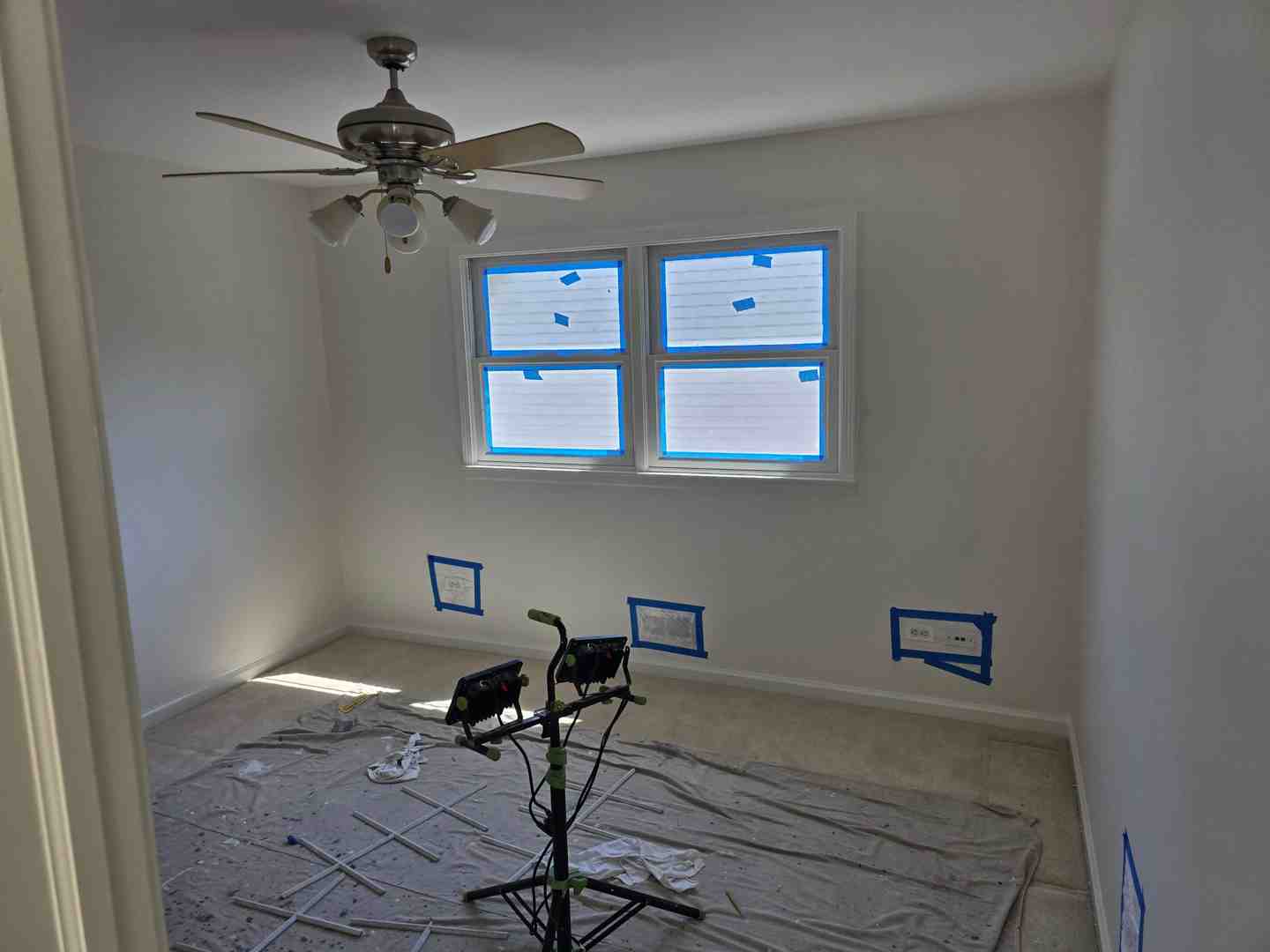
How to Get a Durable Paint Finish on Walls
For a durable paint finish, choose satin for busy hallways and kitchen walls. In bathrooms, use a moisture-resistant satin or semi-gloss paint. Semi-gloss is also a practical choice for trim and cabinets that get touched and cleaned often. Before painting, clean and repair the surface, dull any glossy areas, prime bare or stained spots, and follow the paint label’s directions for coats and drying time.
I’m Tomasz Niemotko, founder of T&Z Interior And Exterior Painting, a licensed and insured contractor founded in 2009 and based at 1101 S Columbine Ave, Lombard, IL 60148. With over 15 years of painting experience, I help homeowners choose a durable paint finish that suits each surface.
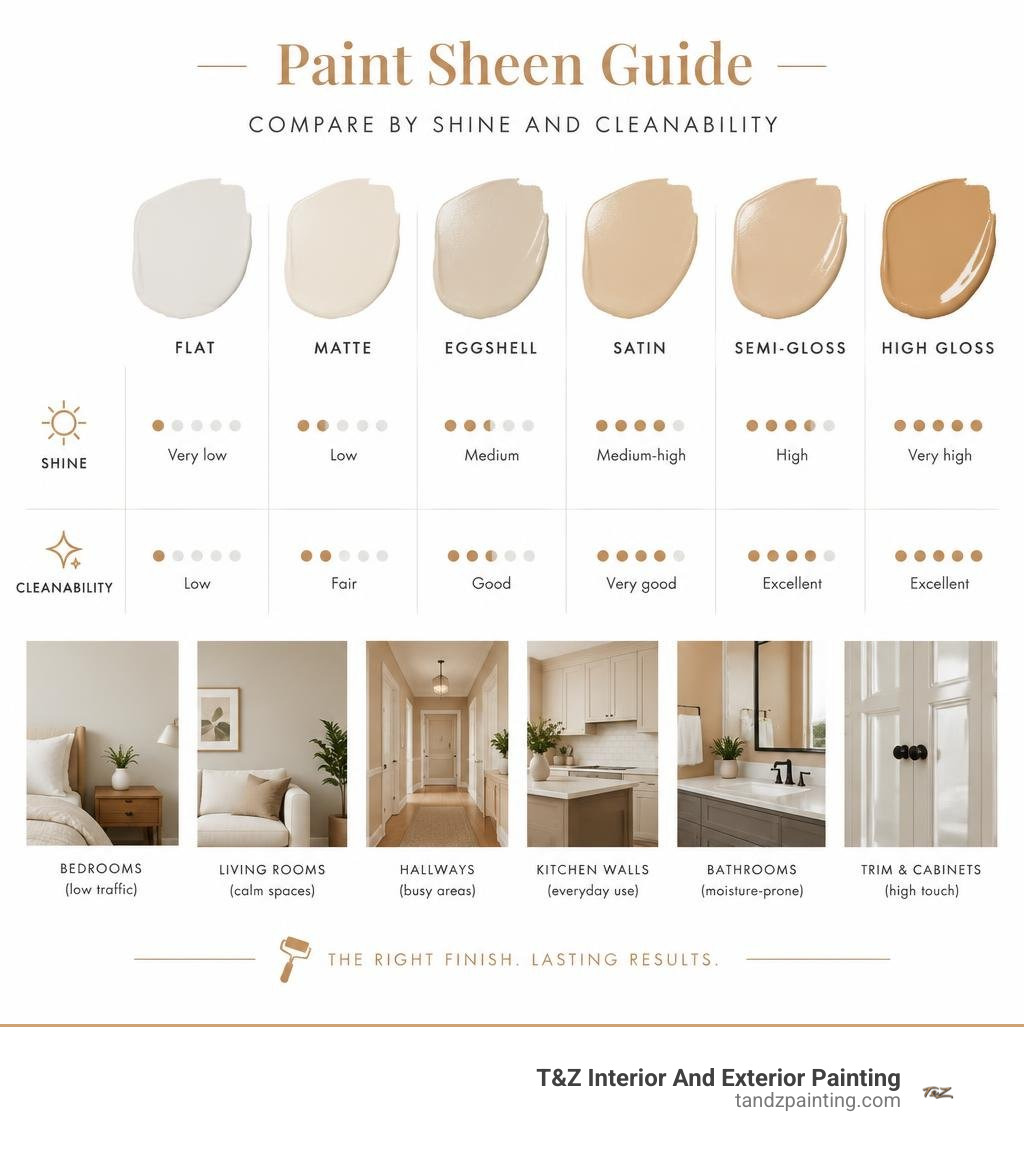
Durable paint finish vocab to learn:
Understanding Paint Sheen and Why It Dictates a Durable Paint Finish
A paint finish is defined by its sheen, which measures how much light reflects off the cured surface. Beyond visual appeal, sheen directly reflects the internal chemistry of the paint film. In any can of paint, the ratio of solid binders (resins) to pigments determines how tough and non-porous the dried film will be.
When you increase the sheen level, you increase the concentration of resin binders. These binders melt together as the paint dries, creating a tight, impermeable barrier that resists moisture, grease, hand oils, and dirt. Understanding how sheen impacts wear resistance makes it simple to demystify paint finishes for every room in your home.
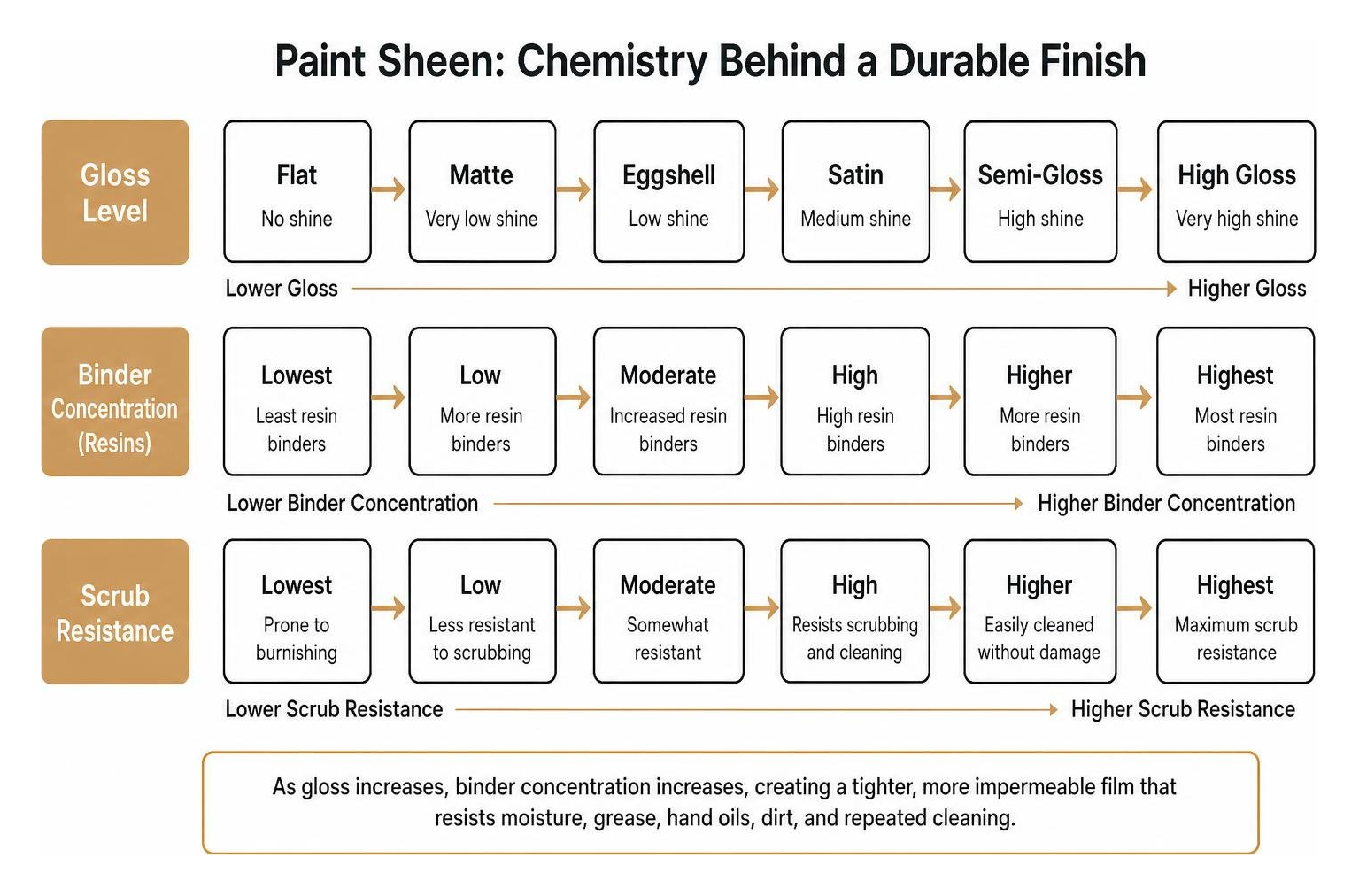
Because higher-gloss paints contain fewer exposed pigment particles at the surface, they are much easier to clean. When you scrub a lower-sheen paint like flat or standard matte, the friction can easily buff the micro-rough surface flat, leaving a permanent shiny spot. This flaw is called “burnishing.” Paints with higher binder concentrations resist burnishing, allowing repeated washing without degrading the look or integrity of the wall. Exploring types of paint and paint finishes helps identify which formulation provides the right balance of light absorption and washability for specific architectural surfaces.
Sheen Levels Breakdown: Flat to High Gloss
Paint sheens span a standard spectrum from completely non-reflective to a mirror-like shine. Each step up the sheen ladder provides increased scrub resistance, though higher shine will also highlight drywall imperfections and uneven framing.
Consulting a paint sheens guide helps clarify which finish balances light diffusion with physical wear across different spaces:
| Paint Sheen | Light Reflectance | Durability & Scrubbability | Best Surface Applications |
|---|---|---|---|
| Flat | 0% to 3% (No shine) | Low; prone to burnishing | Ceilings, low-traffic guest rooms, closets |
| Matte | 3% to 10% (Low luster) | Moderate; specialized formulas wash well | Adult bedrooms, formal dining rooms |
| Eggshell | 10% to 25% (Soft sheen) | Moderate to high; wipes clean easily | Living rooms, bedrooms, home offices |
| Satin | 25% to 40% (Pearl-like) | High; excellent scrub and moisture defense | Hallways, family rooms, laundry rooms |
| Semi-Gloss | 40% to 70% (Glossy) | Very high; grease and moisture repellent | Kitchens, bathrooms, baseboards, doors |
| High Gloss | 70%+ (Mirror shine) | Maximum; extreme scratch resistance | Cabinets, architectural trim, front doors |
- Flat and Matte: Flat paints absorb light completely, making them ideal for concealing joint ridges, patches, and ceiling textures. While standard flat formulas will mark easily under scrubbing, modern premium matte formulations offer improved washability for low-impact living areas.
- Eggshell and Satin: Eggshell provides a soft glow reminiscent of its namesake, offering moderate cleanability without excessive glare. Satin introduces higher resin content, making it noticeably more resilient against scuffs and moisture in busy corridors.
- Semi-Gloss and High Gloss: These enamels dry to a hard, non-porous shell. Water droplets and grease remain on the surface rather than penetrating the film, making them the standard for trim, molding, and high-humidity rooms.
How Resin and Pigments Create a Durable Paint Finish
Achieving long-term coating performance requires looking past sheen to the raw ingredients within the can. High-grade paints rely on an engineered balance of four primary components: binders, prime pigments, liquid carriers, and specialty additives.
- Binders (Resins): The binder forms the continuous film that adheres to the substrate. Premium paints utilize 100% acrylic or modified alkyd-acrylic binders. These resins remain flexible over time, allowing the paint film to expand and contract with seasonal indoor temperature and humidity changes without cracking, flaking, or peeling.
- Prime Pigments vs. Extender Pigments: High-grade paints use pure titanium dioxide for white bases and prime colorants. These provide dense hiding power, requiring fewer coats. Cheaper paints dilute formulas with chalky extender pigments (like calcium carbonate or talc) that weaken film hardness and reduce scrub resistance.
- Additives: Performance-enhancing additives include rheology modifiers, which ensure proper paint leveling to eliminate brush and roller marks, and mildewcides that inhibit biological growth in damp rooms.
Selecting high-quality paints formulated with high solids content ensures that once the water carrier evaporates, a dense, resilient plastic film remains bonded to the wall. For technical data on raw component ratios, review A Guide to Quality Paint Selection by Sherwin-Williams.
Best Paint Finishes for High-Traffic and High-Moisture Rooms

Every room in a home experiences different environmental pressures. Hallways and mudrooms endure physical impact from shoes, bags, and pets. Bathrooms and laundry rooms face persistent humidity, steam cycles, and condensation. Kitchens contend with airborne grease, food splatters, and daily chemical wipe-downs.
Matching the paint sheen and formulation directly to the room’s moisture exposure and traffic level prevents premature peeling, staining, and finish degradation.
Selecting the Best Sheen for Hallways, Kitchens, and Bathrooms
In busy hallways and entryways, satin is often the ideal choice. It provides enough surface hardness to endure regular wiping and scuff removal without producing the distracting glare that a semi-gloss might cast down a long corridor.
For kitchens and bathrooms, moisture protection is the top priority. Water vapor can penetrate standard drywall coatings, causing moisture-trapping blisters that eventually lead to peeling and mildew growth behind the film.
- Kitchen Walls: Satin or semi-gloss enamels resist cooking oils and allow easy cleanup with mild degreasers.
- Kitchen Cabinets: Cabinetry requires harder enamels capable of withstanding constant hand oils and mechanical contact; see why semi-gloss paint is practical for cabinets to understand its washability benefits.
- Bathrooms: Semi-gloss provides an impenetrable moisture barrier on walls and ceilings subject to shower steam. If a low-shine look is preferred, select an acrylic formulation engineered specifically for high humidity with built-in antimicrobial agents.
Trim, Doors, and Cabinetry: Achieving a Durable Paint Finish on High-Touch Woodwork
Interior woodwork, doors, baseboards, and window casings absorb more direct physical impact than flat walls. Standard latex wall paints remain too soft and rubbery for these elements, leading to chipping when vacuum cleaners strike baseboards or when doors close against jambs.
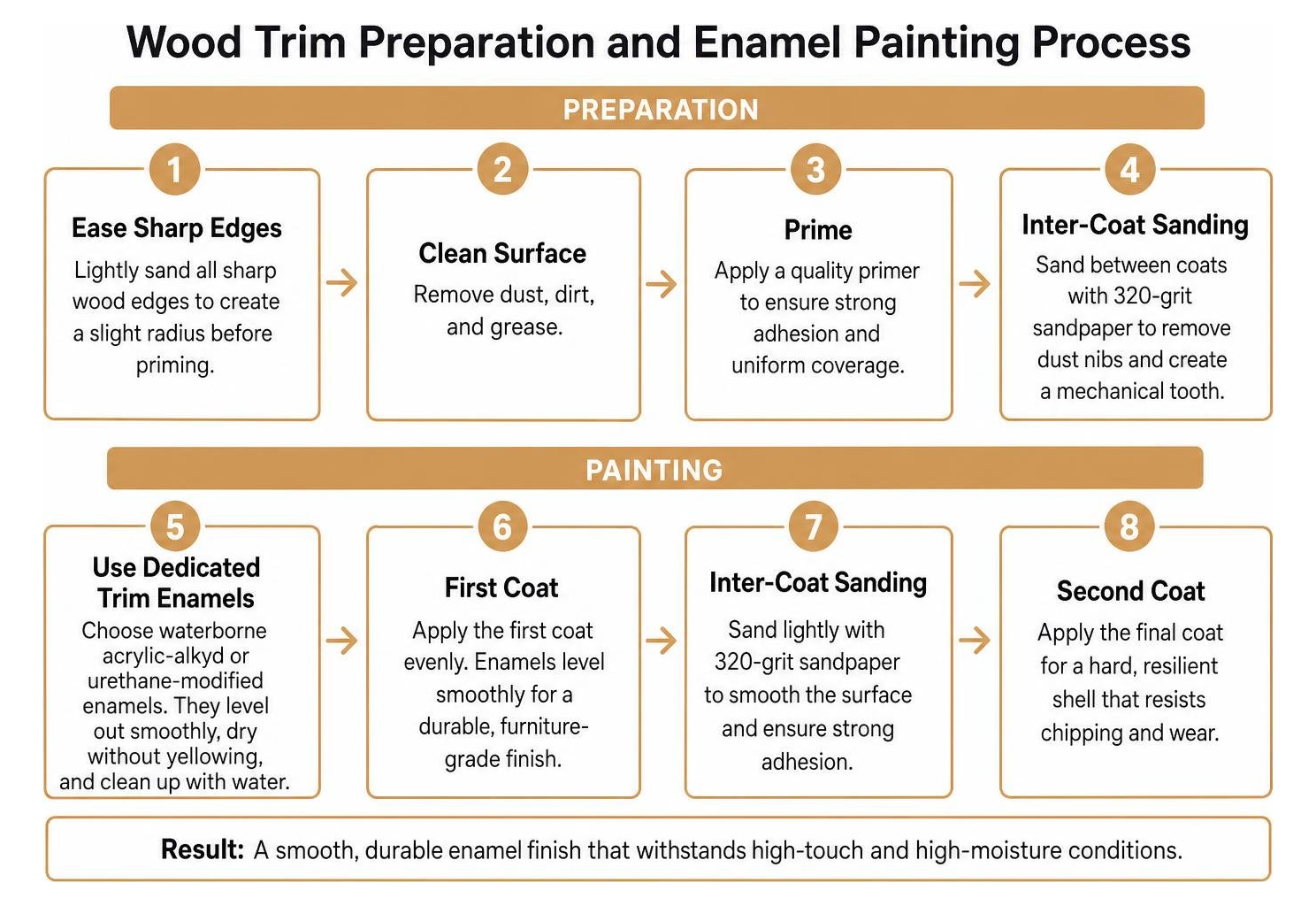
For high-touch woodwork:
- Use Dedicated Trim Enamels: Choose waterborne acrylic-alkyd or urethane-modified enamels. These products level out smoothly like traditional oil paints but dry without yellowing and clean up with water. They cure to a hard, furniture-grade shell.
- Ease Sharp Edges: Surface tension causes paint to pull away from sharp 90-degree wood corners as it dries, leaving a microscopically thin edge that chips easily. Lightly sand all sharp wood edges to create a slight radius before priming.
- Inter-Coat Sanding: Sanding between coats with 320-grit sandpaper removes dust nibs and creates a mechanical tooth, ensuring strong adhesion between layers. Learning how to select durable interior cabinet paint protects wood installations against chipping and wear.
Essential Surface Preparation and Application for Maximum Finish Durability

Even the highest-grade paint will fail prematurely if applied over an improperly prepped substrate. Finish durability relies entirely on the mechanical and chemical bond established with the surface beneath it. Following proven house painting tips and tricks ensures the finished coating performs as designed.
Essential preparation steps include:
- Cleaning and Degreasing: Wash surfaces near stoves, light switches, and door frames with a clean, damp cloth and mild detergent to remove grease and oils that interfere with paint adhesion.
- Patching and Repair: Fill dents, gouges, and nail holes with quality spackle or joint compound, sanding flush once fully dry.
- De-Glossing Existing Finishes: Paint cannot bond effectively to slick, glossy surfaces. Scuff-sand existing high-sheen paint using 180-grit to 220-grit sandpaper to create a uniform profile.
- Dust Removal: Vacuum walls and wipe thoroughly with a microfiber cloth or tack cloth before opening a paint can. Airborne drywall dust prevents paint from making direct contact with the wall.
Choosing Between Dedicated Primer and Self-Priming Paint
While modern paint formulations often feature “paint and primer in one” labeling, there remains a critical distinction between self-priming paint and standalone bonding primers.
Self-priming paints contain higher resin content to seal previously painted, uniform drywall in good condition. However, challenging surfaces require a dedicated primer.
- Porous Drywall & New Patches: Bare drywall and fresh joint compound absorb paint unevenly, causing a patchy, uneven sheen known as “flashing.” Apply a dedicated PVA (polyvinyl acetate) drywall sealer first.
- Stains and Water Marks: Water stains, smoke damage, and ink will bleed directly through standard latex paints. Use a stain-blocking acrylic or oil-based primer.
- Bare Wood & Knots: Softwoods like pine contain sap and tannins that bleed through topcoats. Seal knots with a pigmented shellac-based primer to prevent yellow bleed-through.
- Glossy or Non-Porous Substrates: Smooth surfaces like laminate, factory-finished cabinets, or metal require a bonding primer designed to grip slick surfaces.
Avoiding Common Application Mistakes That Weaken Paint Durability
Poor application technique can compromise the structural integrity of the paint film:
- Improper Roller Nap Selection: Using a roller cover with fibers that are too long creates an uneven, stippled texture that traps dirt. For smooth interior walls, use a 3/8-inch nap roller; for smooth trim and doors, use a 1/4-inch nap or foam roller.
- Working Out of Sequence: Avoid brushing over paint that has already begun to tack up. Doing so creates lap marks, pulls the half-dried film from the wall, and weakens the final finish.
- Rushing Recoat Windows: Applying a second coat before the first coat has completely dried traps moisture within the base layer. This prevents proper film formation, leading to soft paint that easily scratches.
- Misunderstanding Dry Time vs. Cure Time: Standard latex paint dries to the touch in 1 to 2 hours, but it requires 14 to 30 days to fully cure. During this curing period, the paint is vulnerable to gouging, heavy scrubbing, and moisture accumulation.
Frequently Asked Questions About Durable Paint Finishes
Does darker paint color affect sheen durability?
Yes. Deep, saturated paint colors require significantly more liquid colorant (tint) added to a clear or neutral base. Heavy tint loads slightly increase the natural sheen of the dried paint, making a matte finish look closer to an eggshell. Additionally, deep pigments can be softer than white titanium dioxide bases, making dark walls more susceptible to burnishing and visible scuffs if scrubbed aggressively.
Can you apply a clear protective topcoat over wall paint?
While unnecessary for standard drywall, applying a protective clear coat over high-contact painted woodwork or furniture provides exceptional scratch resistance. If using an acrylic polyurethane over painted wood, allow the paint to cure for at least 7 full days. Scuff-sand the painted surface lightly with 320-grit sandpaper to ensure mechanical bonding, wipe away all dust, and apply two thin coats of clear acrylic topcoat.
How do you clean walls without damaging or burnishing the finish?
To clean painted walls without ruining the sheen:
- Dust the surface first with a dry microfiber duster.
- Mix a few drops of mild dish soap into a bucket of warm water. Avoid harsh chemical cleaners or abrasive scouring pads.
- Wet a soft microfiber cloth with the soapy water and wring it out until it is only slightly damp.
- Wipe the wall using light, circular motions without applying excessive pressure.
- Rinse the area with a second cloth dampened with clean water, then pat dry with a clean towel.
Conclusion: Protecting Your Home with a Long-Lasting Finish
Selecting the right paint sheen and using proper preparation techniques ensures your walls and woodwork withstand daily family life, moisture exposure, and routine cleaning.
T&Z Interior And Exterior Painting is a licensed and insured painting contractor based in Lombard, IL. Founded in 2009 by Tomasz Niemotko, our local team brings over 15 years of painting experience to every project. We hold a 5.0 Google rating backed by 85+ reviews and provide a 2-year warranty on our work.
We provide comprehensive residential and commercial painting, drywall repair, cabinet refinishing, and professional interior painting services throughout Lombard, Glen Ellyn, Villa Park, Oak Brook, Oakbrook Terrace, Downers Grove, Wheaton, Elmhurst, Addison, Itasca, Roselle, Bloomingdale, Carol Stream, Wood Dale, Westmont, Bensenville, Berkeley, Hillside, Schiller Park, Glendale Heights, Schaumburg, and Chicago.
Ready to refresh your home with clean lines and long-lasting durability? Request a free estimate on tandzpainting.com or call our team today at (224) 240-0054.