
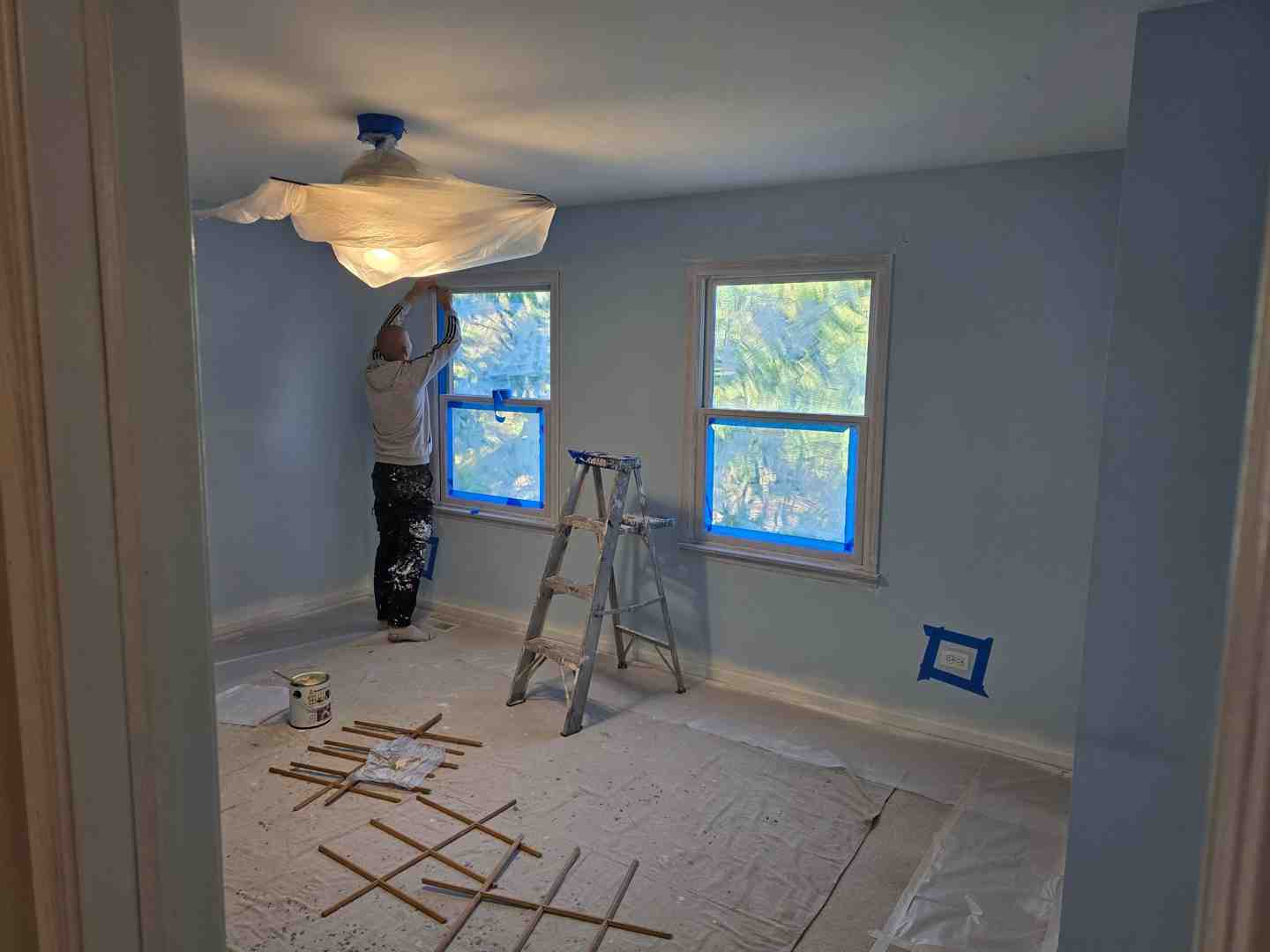
Choosing Indoor Paint Finishes by Room and Surface
The best indoor paint finishes depend on where the paint will go. Choose flat for ceilings, eggshell for most walls, satin for busy hallways and kitchen or bathroom walls, and semi-gloss for trim, doors, and cabinets. Lower sheens hide surface flaws; higher sheens are easier to clean but show more bumps and marks.
I’m Tomasz Niemotko, owner and founder of T&Z Interior And Exterior Painting, a licensed and insured painting contractor founded in 2009 and based at 1101 S Columbine Ave, Lombard, IL 60148. With over 15 years of experience in interior and cabinet painting, I help homeowners choose indoor paint finishes that fit each room’s look and daily use.
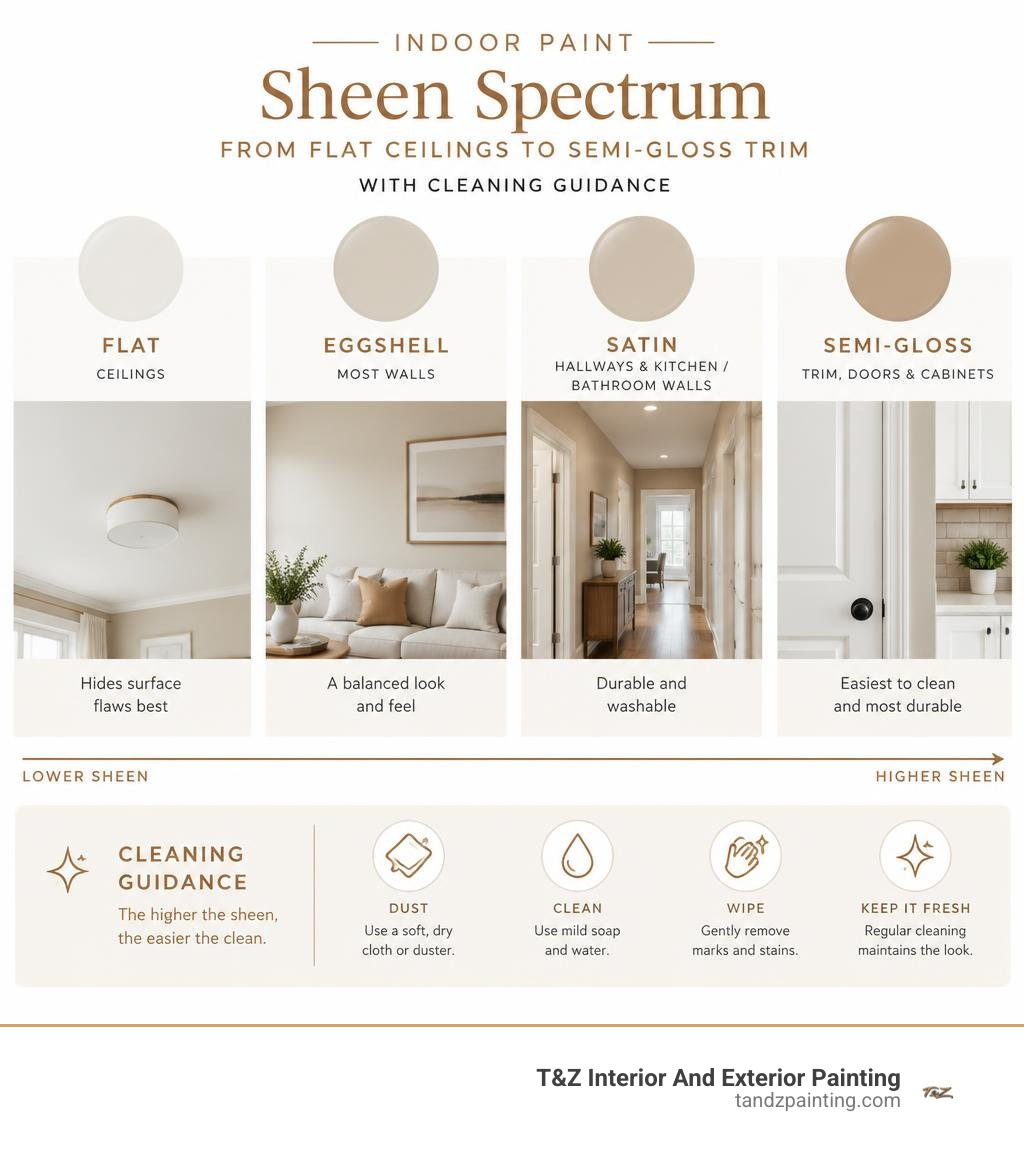
Indoor paint finishes terms you need:
Understanding Paint Sheen and Light Reflection Mechanics
Paint sheen describes the amount of light that bounces off a dried, cured paint surface. When we evaluate sheen, we are looking at how paint chemistry interacts with natural and artificial lighting. This interaction comes down to the balance between solid pigments and liquid resin binders, known in the coatings industry as Pigment Volume Concentration (PVC).
Higher PVC levels mean the coating has more pigment particles and fewer resin binders. When the paint dries, these microscopic pigment particles create a slightly textured, non-reflective surface that scatters light in every direction. This diffusion absorbs glare and helps camouflage minor drywall dents, nail pops, and uneven seams. Conversely, lower PVC ratings mean the paint contains a higher concentration of resin binders. These binders dry into a smooth, tight film that produces specular reflection—bouncing light directly back at the viewer to create a distinct shine.
Understanding this balance is central to The Spruce guide on paint finish types. When you review our designer insights on common wall sheens, you will see that washability and durability directly correlate with the resin content. Resins create a tough barrier that prevents stains, grease, and moisture from penetrating the paint layer, allowing for regular wiping without wearing away the color.
| Paint Finish | PVC Percentage Range | Average PVC | Light Reflectivity Level | Best Functional Role |
|---|---|---|---|---|
| Flat | 40% to 80% | 60% | 0% to 5% (Zero gloss) | Ceilings and low-traffic areas |
| Eggshell | 35% to 40% | 37.5% | 10% to 25% (Soft luster) | Living rooms, bedrooms, and dining rooms |
| Satin | 30% to 40% | 35% | 25% to 35% (Silky glow) | Hallways, kitchens, and kid-friendly spaces |
| Semi-Gloss | 15% to 25% | 20% | 35% to 70% (Radiant shine) | Baseboards, trim, doors, and cabinets |
| High-Gloss | 0% to 15% | 7.5% | 70% to 90%+ (Glass-like) | Architectural details and specialty cabinetry |

Comparing the 5 Core Types of Indoor Paint Finishes
Interior paint is generally divided into five primary sheen categories. Choosing the right one requires balancing visual appeal against the functional demands of the space. Because higher-sheen paints contain more binders, a gallon of satin or semi-gloss paint actually weighs more than a gallon of flat paint. In general, one gallon of quality interior paint covers roughly 400 square feet for a single coat, and a properly applied interior finish can last 10 to 15 years under normal conditions.
Low-Sheen Indoor Paint Finishes for Living Areas
Flat and matte finishes deliver rich color saturation because there is no reflective glare interfering with the pigment. Standard flat paint has virtually no gloss, making it the best choice for concealing rough textures, drywall repairs, and ceiling flaws. That is why professional crews rely on dedicated flat paint application for ceilings to deliver uniform, seamless overhead planes.
Matte finishes offer a step up from flat by incorporating a slightly higher binder content. This gives them improved scrub resistance while preserving an understated, velvety look. For general living spaces, however, eggshell remains the most popular wall finish. It provides a soft, low-luster surface that resists light scuffs while hiding the minor wall blemishes common in older homes. Homeowners can explore the practical benefits of eggshell paint for shared spaces. That scrubbing flat or low-quality eggshell paint too aggressively can cause “burnishing”—a permanent shiny spot where the pigment particles have been smoothed down. For further reading on finish behavior, consult the Architectural Digest interior paint buying guide.
Mid-Range Satin Finishes for High-Traffic Zones
Satin finish is widely regarded as the most versatile mid-sheen option. It delivers an elegant, pearl-like luster that reflects moderate light without creating harsh glare. The tighter resin matrix in satin paint creates an effective moisture and dirt barrier, making it easy to wipe down after daily activity.
We frequently specify satin for busy hallways, family rooms, entry foyers, and playrooms where fingerprints, pet scuffs, and stray marks are routine. If you need robust performance on active walls, reviewing durable wall paint finishes can help pinpoint where satin delivers the best balance of cleanability and appearance. Because satin has a noticeable luster, it must be applied with even pressure and maintained wet edges to prevent visible roller lap marks.
High-Gloss Indoor Paint Finishes for Trim and Cabinets
Semi-gloss and high-gloss paints offer maximum durability, stain resistance, and washability. Semi-gloss reflects substantial light and cures to a hard, non-porous film that handles frequent contact, making it the industry standard for baseboards, window casings, interior doors, and wainscoting. Homeowners looking to upgrade woodwork can read our advice on recommended sheens for interior trim.
High-gloss paint provides an almost mirror-like, glass-smooth enamel surface. It is often used on statement millwork or decorative furniture. When planning a kitchen renovation, selecting the ideal cabinet finish is a critical decision. Semi-gloss and high-gloss finishes require careful prep work: every dent, scratch, or wood grain flaw must be sanded smooth, filled, and primed, as these reflective sheens magnify every underlying substrate defect.
Selecting the Right Finish for Every Room in Your Home
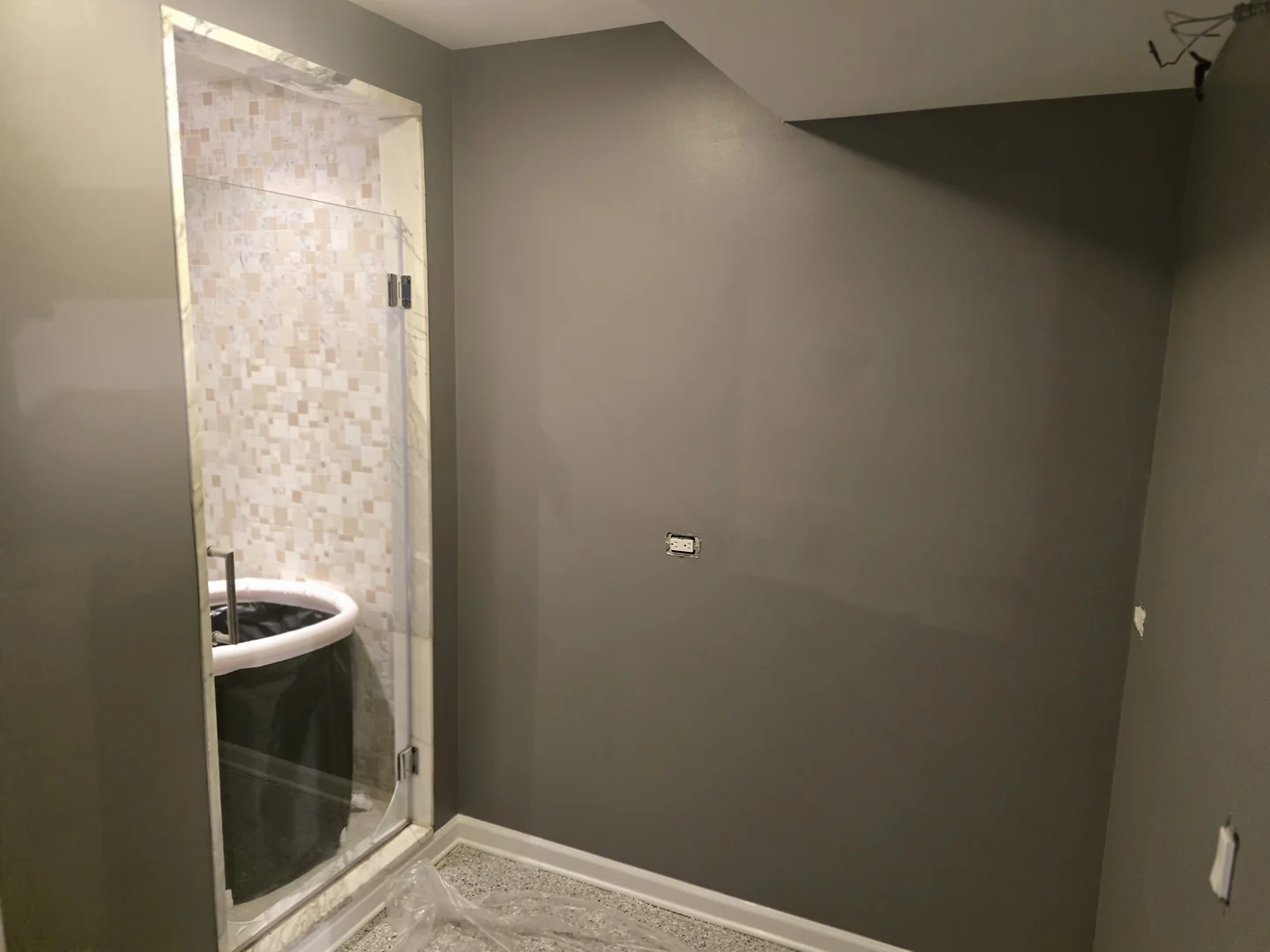
Choosing the correct finish requires looking at foot traffic, moisture levels, natural lighting, and the physical condition of the walls in each individual room.
Moisture-Prone Spaces: Kitchens and Bathrooms
Kitchens and bathrooms face constant humidity, steam, temperature swings, and cooking residue. Using a flat or low-grade eggshell finish in these rooms can lead to water spots, stains, and premature peeling.
For bathroom walls, satin is often the ideal choice because it repels moisture without creating reflective mirror glare across narrow spaces. Homeowners can learn more about bathroom wall paint finish selection to protect against water damage. In kitchens, evaluate your cooking zone: satin provides excellent wipeability against food splatters, while semi-gloss is ideal for baseboards, pantry doors, and cabinets. You can review the trade-offs in our guide on satin paint performance in kitchens. Many leading paint manufacturers also produce specialized moisture-resistant formulations that allow matte finishes to perform well in high-humidity areas without trapping mildew.
Quiet and Formal Spaces: Bedrooms, Ceilings, and Dining Rooms
In low-traffic, restful spaces like master bedrooms and formal dining rooms, washability is less of a concern than light diffusion and atmosphere. Flat and matte finishes create a calm, glare-free environment that softens artificial lighting.
For smaller guest rooms or master suites, pairing calming wall colors and soft finishes produces an inviting, restful mood. Ceilings across almost every room should receive a dedicated flat ceiling paint. Overhead lighting and natural window light strike ceilings at sharp angles, which exaggerates drywall joints and imperfections if any sheen is present. If you are considering painting your ceiling the same shade as your walls, check out our guide on coordinating ceiling and wall colors using contrasting sheens to maintain visual height.
Coordinating Multiple Paint Finishes in a Single Space
A balanced room design often uses multiple sheens in the same space to establish depth, structure, and visual hierarchy. When walls, ceilings, and trim are painted in identical sheens, a room can feel flat and undefined. By contrasting sheens, you can highlight architectural features even when using a single paint color throughout the space.
A standard, time-tested approach pairs:
- Ceilings: Flat finish to absorb light and eliminate overhead glare.
- Walls: Eggshell or satin finish for subtle warmth, soft light reflection, and easy maintenance.
- Trim, Baseboards, and Doors: Semi-gloss finish to create a crisp, durable architectural frame that resists scuffs and marks.
When planning your palette, review the Benjamin Moore guide to choosing paint finishes. It is also important to consider indoor air quality during room renovations. Federal guidelines define low-VOC paints as having fewer than 50 grams of volatile organic compounds per liter, while zero-VOC paints contain fewer than 5 grams per liter. You can learn more about eco-friendly coatings in our guide to sustainable low-VOC paint standards.
Frequently Asked Questions About Paint Finishes
What is the most durable paint finish for interior walls?
Satin is generally the most durable finish for general interior walls. It contains a higher concentration of resin binders than eggshell or flat paint, creating a tough, non-porous surface that withstands frequent scrubbing, moisture, and everyday scuff marks in busy areas.
Can you combine flat ceiling paint with satin wall paint?
Yes, pairing flat ceiling paint with satin wall paint is an effective and widely used approach. The flat ceiling absorbs harsh light reflections to mask drywall joints overhead, while the satin walls provide durability, subtle light reflection, and simple cleaning at eye level.
Does paint sheen change the way a color looks?
Yes. Higher-sheen paints reflect more light, making colors appear slightly lighter, brighter, and more vivid under direct illumination. Flatter finishes absorb light, giving the exact same paint color a deeper, softer, and more muted appearance. Always test physical sample swatches on your walls to see how natural lighting influences the finish throughout the day.
Conclusion
Choosing the right indoor paint finishes protects your walls, makes daily maintenance straightforward, and brings out the best in your interior design. Balancing light reflectivity with surface durability ensures each room looks great and holds up to everyday living.
When you need flawless results, working with a professional team takes the stress out of surface preparation and finish application. T&Z Interior And Exterior Painting was founded in 2009 by Tomasz Niemotko, bringing over 15 years of hands-on experience to every project. We are a fully licensed and insured painting contractor based at 1101 S Columbine Ave, Lombard, IL 60148. We proudly maintain BBB accreditation, a 5.0 Google rating with 85+ reviews, and back our workmanship with a dependable 2-year warranty.
We serve homeowners across Lombard, Glen Ellyn, Villa Park, Oak Brook, Oakbrook Terrace, Downers Grove, Wheaton, Elmhurst, Addison, Itasca, Roselle, Bloomingdale, Carol Stream, Wood Dale, Westmont, Bensenville, Berkeley, Hillside, Schiller Park, Glendale Heights, Schaumburg, and Chicago. Whether you need drywall repair, cabinet refinishing, or full expert interior painting services, we are here to help.
Request your free estimate today at tandzpainting.com or call us directly at (224) 240-0054 to discuss your next project.