
Choosing Eco-Friendly Paint for a Small Home
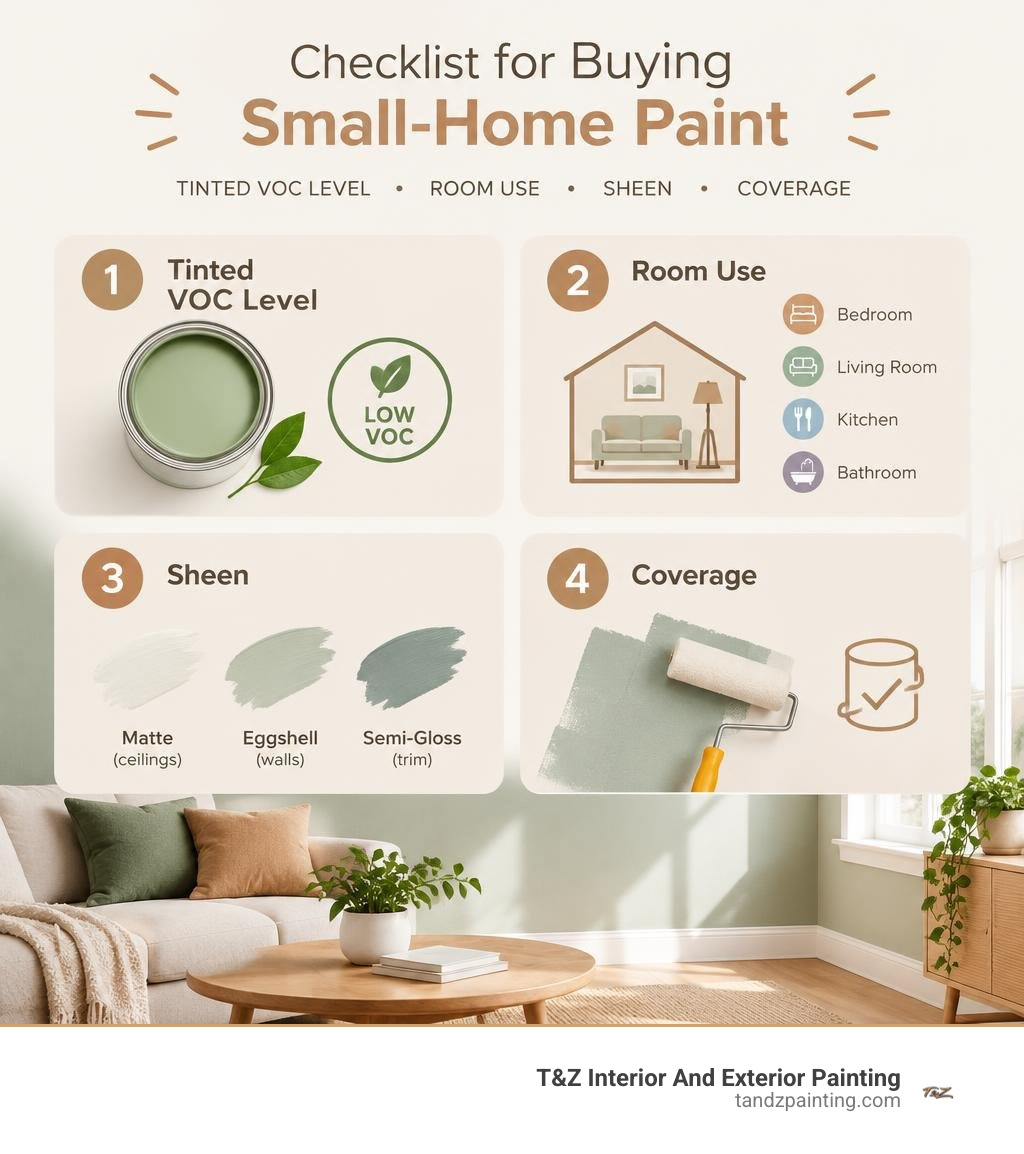
Start with a water-based, zero-VOC interior paint, then check the VOC level after tinting. ECOS Interior Wall Paint, Behr Premium Plus, and AFM Safecoat are worth comparing for small-home projects. Check each product’s current data sheet for its VOC level, coverage, and recommended use. For most walls, choose eggshell for easier cleaning; use matte on ceilings and semi-gloss on trim.
A zero-VOC label does not mean every tinted color has the same VOC level. Ask whether the store uses zero-VOC colorants, and keep the room ventilated while the paint dries.
I’m Tomasz Niemotko, owner and founder of T&Z Interior And Exterior Painting, founded in 2009 and based at 1101 S Columbine Ave, Lombard, IL 60148. As a licensed and insured painting contractor with over 15 years of experience, I help homeowners choose eco friendly small home paint that suits the room and stands up to daily use.
Relevant articles related to eco friendly small home paint:
- small home paint ideas
- colors to make a room look bigger and brighter
- painting ideas for small house
Understanding VOCs and Non-Toxic Paint Formulations
Volatile Organic Compounds (VOCs) are carbon-based chemicals that easily evaporate at room temperature. When applying conventional coatings, these solvents release gases into your living environment through a process known as off-gassing. Common solvents historically used in paints include toluene, xylene, and glycol ethers, all of which release pungent fumes that can linger on surfaces and inside furnishings for weeks or even months.
Exposure to these airborne chemicals often leads to short-term reactions such as headaches, dizziness, watery eyes, and throat irritation. Long-term exposure has been associated with more severe respiratory challenges and damage to internal organs. Selecting safer products such as sustainable interior paints minimizes these risks by replacing harsh petrochemical solvents with waterborne systems and safer natural minerals.
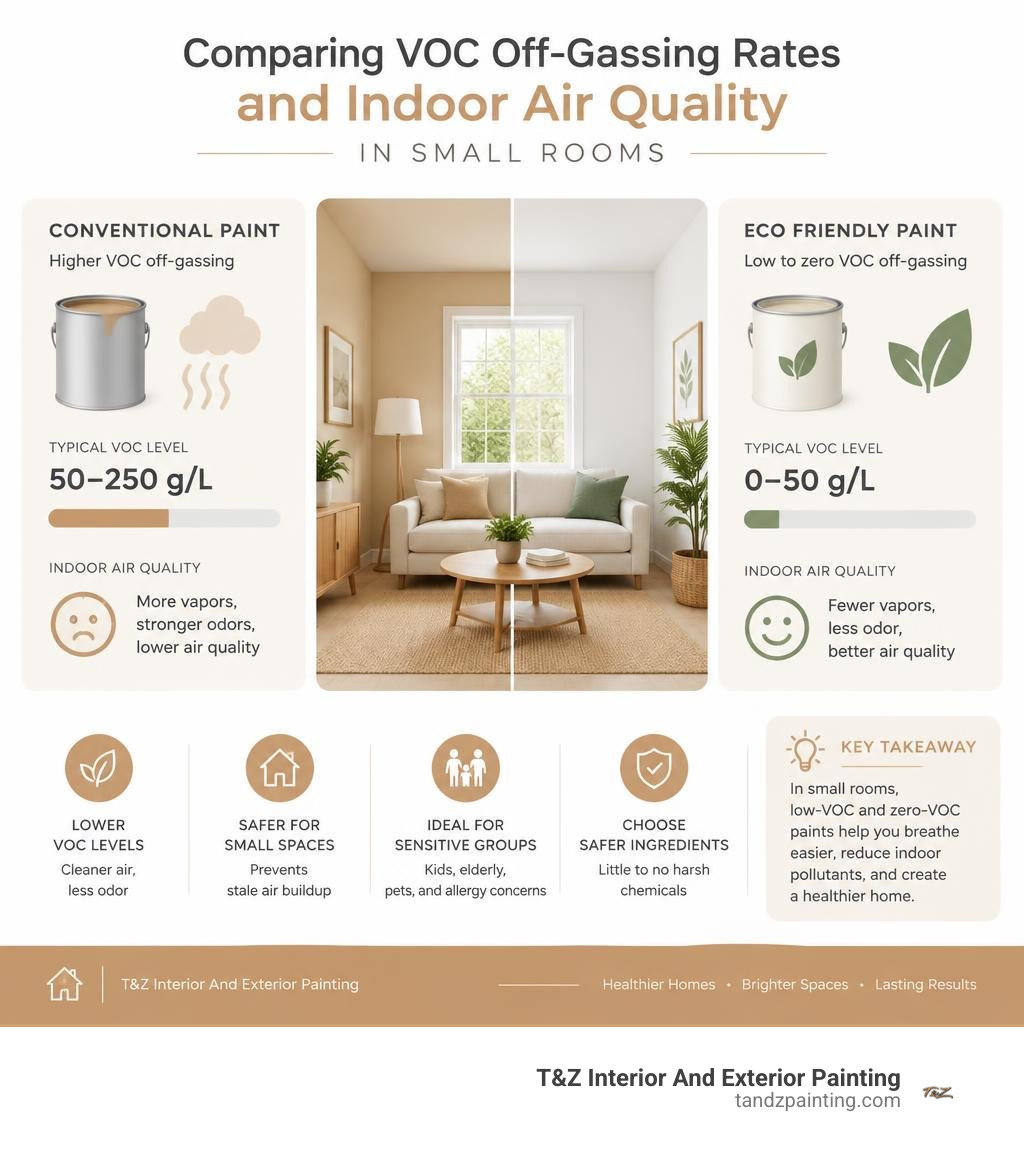
The Environmental Protection Agency (EPA) establishes national baseline limits for paint emissions. Under standard regulations, low-VOC latex paints can contain up to 250 grams per liter (g/L) of VOCs, while oil-based coatings are permitted up to 380 g/L. However, contemporary manufacturing has advanced significantly. High-performing green formulas now register well below 50 g/L, and many true zero-VOC bases test at 0.0 g/L before tinting. You can review current VOC standards and indoor air quality guidance on the EPA’s website.
Why VOC Levels Matter in Compact Living Spaces
In smaller residences, condos, and compact bungalows, air volume is limited. When you apply paint across four walls and a ceiling in a tight room, the concentration of evaporating chemicals rises much faster than it would in an open-concept layout. The EPA notes that indoor air pollutant levels are typically two to five times higher than outdoor levels, and VOC concentrations can climb up to ten times higher indoors during standard painting projects. If you are stripping old coatings during prep work, chemical concentrations can skyrocket up to 1,000 times higher.
Because enclosed bedrooms, tight hallways, and compact home offices have fewer cubic feet of air to dilute vapors, choosing odorless, low-emission products prevents stale air buildup. This is especially vital for households with young children, elderly family members, pets, or anyone managing asthma and chemical sensitivities.
What Makes an Eco Friendly Small Home Paint Safe?
A truly safe coating is defined by what is left out of the can as much as what goes into it. Safe formulations eliminate toxic drying agents, formaldehyde precursors, heavy metals (such as lead, cadmium, and hexavalent chromium), and harsh preservatives like certain isothiazolinones. Instead, manufacturers rely on renewable plant oils, plant-based resins, clays, and purified waterborne binders.
To verify product safety, look for third-party testing rather than marketing claims alone:
- ASTM D-4236 Certification: Confirms that every component in the formula has been evaluated by a toxicologist for chronic health hazards and deemed non-toxic. Several zero-VOC paint manufacturers publish this standard on their product data sheets.
- GREENGUARD Gold: Ensures the coating meets strict chemical emission limits and contains less than 50 g/L of VOCs, making it suitable for sensitive indoor environments.
- Green Seal (GS-11): Restricts VOC levels to no more than 50 g/L for flat sheens and 100 g/L for non-flat sheens, while banning toxic chemical compounds.
- Declare Label / Red List Free: Provides full ingredient transparency, proving the product contains no harmful building chemicals designated by the International Living Future Institute.
Top Eco Friendly Small Home Paint Options and Formulas
Selecting the right coating involves matching binder chemistry to your room’s traffic and moisture levels. Today’s market provides several distinct categories of green finishes, from high-solids waterborne acrylics to bio-based and mineral options. Choosing high-quality paints ensures excellent hiding power without needing multiple extra coats that add labor and material waste.
Natural Paints vs Zero-VOC Acrylics for Compact Rooms
Natural paints—including clay, milk, and mineral washes—derive their binders from organic and earth-based elements rather than petroleum synthetic resins. Milk paints use milk protein (casein) and lime, while clay paints use natural earth pigments and plant starches. In contrast, modern zero-VOC acrylics rely on synthetic polymers suspended in water that dry to create a durable, wipeable surface.
While natural paints offer breathable, velvety matte textures, natural ingredients like pine rosin can contain plant-derived terpenes, which are technically naturally occurring VOCs. For spaces requiring high scrub resistance, modern waterborne acrylics often provide better day-to-day washability, whereas plant-based paint formulas offer high bio-content (often exceeding 50% bio-based material) and earth-mineral textures.
| Paint Category | Typical VOC Content | Average Coverage (sq ft/gal) | Durability & Washability | Best Room Applications |
|---|---|---|---|---|
| Zero-VOC Waterborne Acrylic | < 5 g/L (often 0.0 g/L base) | 400 – 560 | High (Stain-resistant, scrubbable) | Living rooms, hallways, kids’ rooms, kitchens |
| Recycled Latex Paint | < 50 g/L | 350 – 400 | Moderate to High | Basements, accent walls, general living spaces |
| Natural Clay Paint | Zero petrochemical VOCs | 300 – 380 | Low to Moderate (Wipe gently) | Low-traffic bedrooms, ceilings, rustic spaces |
| Casein Milk Paint | Zero VOCs (biodegradable) | 250 – 350 | Moderate (Requires top sealer) | Accent walls, furniture, decorative trim |
Certified Low-VOC and Zero-VOC Brands Reviewed
Several dependable brands offer formulations well-suited for smaller homes:
- ECOS Paints: Formulated with 0.0 g/L VOCs in both base and colorants, offering up to 560 square feet of coverage per gallon—roughly 1.5 times the spread rate of conventional products. Their titanium dioxide content provides high hide capability in fewer passes.
- AFM Safecoat: Engineered specifically for chemically sensitive individuals, providing solid coverage and zero-VOC bases that seal underlying drywall off-gassing.
- Benjamin Moore Eco Spec & Ultra Spec 500: Commercial-grade zero-VOC base systems that utilize proprietary waterborne Gennex colorants to maintain zero-VOC levels after mixing. They work well for creating cohesive flow when testing small dining room color ideas.
- Behr Premium Plus: An accessible, budget-friendly low-odor, zero-VOC base formula certified by GREENGUARD Gold.
- Recycled Latex Paints: Choosing recycled latex paint is a sustainable approach where manufacturers collect leftover virgin paints, re-filter, blend, and package them to keep usable material out of landfills. These options typically register below 50 g/L VOCs and work well for basements and accent walls.
Application Techniques and Sheen Selection for Tight Spaces

Applying eco-friendly paint in a tight space requires proper preparation and the right sheen to balance natural lighting with surface protection. For homeowners wanting a clean, uniform finish without brush marks, hiring professional interior painting ensures every wall and ceiling transitions smoothly from room to room.
Choosing Sheens to Maximize Light and Durability
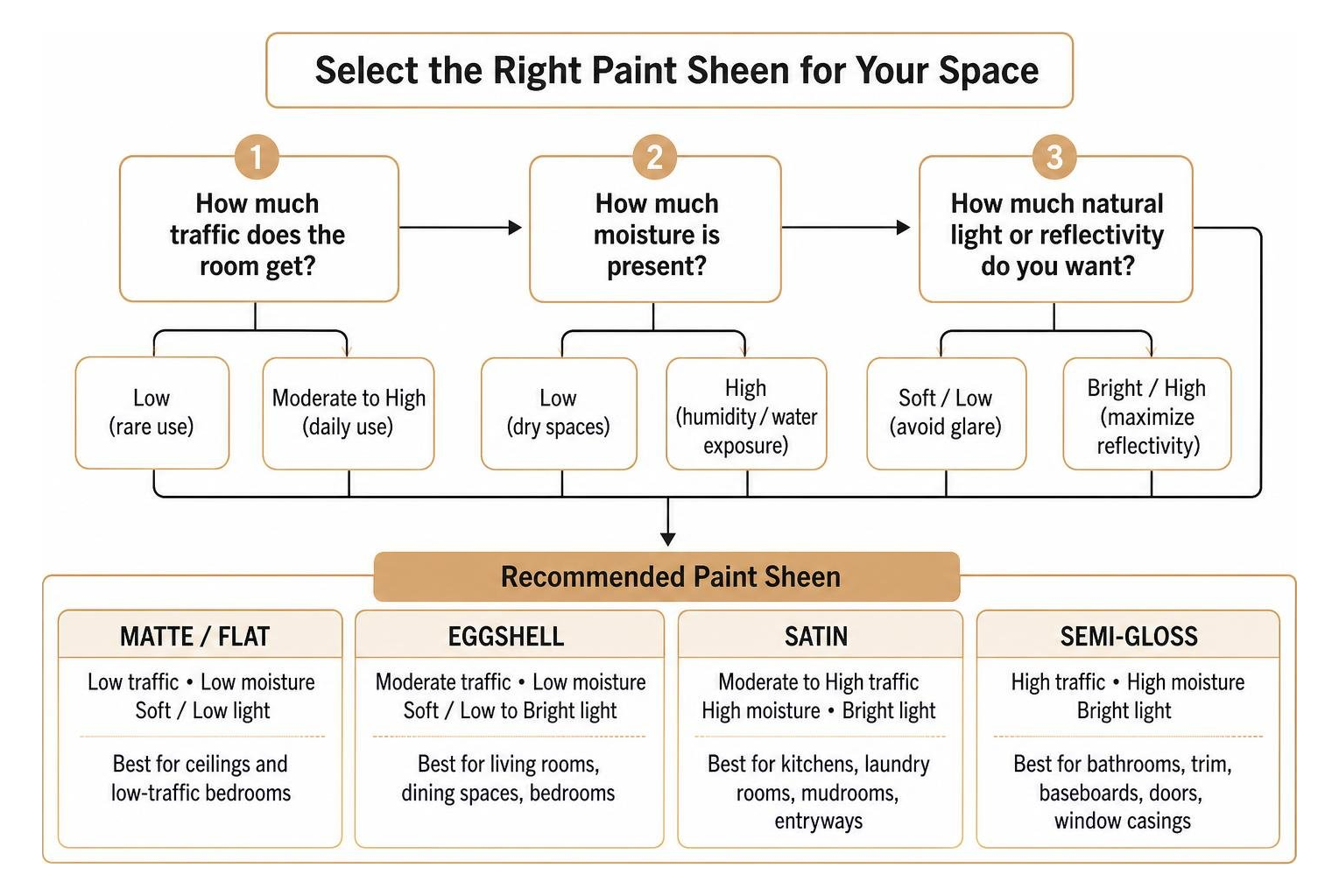
The sheen you choose controls how light bounces across a compact room and how easily the surface can be wiped down:
- Matte / Flat: Absorbs light and hides minor drywall imperfections. Ideal for ceilings and low-traffic adult bedrooms, though harder to scrub unless using specialized scrubbable matte formulas.
- Eggshell: The standard choice for small living rooms, dining spaces, and bedrooms. It provides a soft luster that reflects natural light without highlighting wall bumps, offering great washability. Exploring small home paint ideas that maximize light can help you pair this sheen with light-reflective color palettes.
- Satin: Delivers a higher sheen with enhanced moisture resistance. Great for compact laundry rooms, mudrooms, and narrow entryways subject to scuffs.
- Semi-Gloss: Highly reflective and moisture-tight, making it the right pick for baseboards, window casings, doors, and high-humidity bathroom walls.
Applying Eco Friendly Small Home Paint for Smooth Coverage
Because zero-VOC waterborne formulas lack slow-evaporating solvent thinners, they dry faster than older oil or high-VOC paints. Applying them smoothly requires a few practical steps:
- Clean and Sand Thoroughly: Wash surfaces with a mild, residue-free cleaner and water to remove oils, then lightly sand glossy areas so the waterborne resin adheres properly.
- Select the Proper Roller Nap: Use a 3/8-inch or 1/2-inch shed-resistant microfiber roller cover to lay down an even coat without leaving lint or heavy stipple.
- Work in 3×3 Foot Sections: Paint in manageable three-by-three-foot blocks, maintaining a wet edge to avoid overlap lines and visible roller lap marks.
- Box Your Cans: If using multiple gallons of the same tinted color, blend them together in a larger five-gallon bucket beforehand to ensure color consistency across all walls.
- Maintain Airflow: Keep interior doors open and run a window fan to maintain fresh air circulation and encourage even drying.
- Respect Recoat Times: Allow at least two to four hours between coats depending on humidity; recoating too soon can pull up partially cured film.
Frequently Asked Questions About Eco-Friendly Wall Finishes
Can zero-VOC paint still contain VOCs from added colorants?
Yes. In many conventional paint lines, the un-tinted base paint in the can is zero-VOC, but adding traditional dark or saturated universal colorants at the tint counter can add 10 to 50 g/L of VOCs back into the mix. To ensure the finished paint remains zero-VOC, verify that your supplier uses zero-VOC waterborne colorant dispersion systems, such as Benjamin Moore’s Gennex or ECOS in-house pigments.
How do natural clay and milk paints hold up in high-humidity areas?
Unsealed clay and milk paints are naturally porous and absorb water droplets. In high-humidity areas like compact bathrooms or behind kitchen sinks, unsealed natural paints can soften, stain, or promote mildew behind the surface. If you use milk or clay paint in these locations, apply a breathable, water-resistant non-toxic topcoat or oil-wax sealer, or use an eggshell or semi-gloss zero-VOC acrylic instead.
Are non-toxic and zero-VOC paints durable enough for high-traffic zones?
Yes. Modern zero-VOC acrylic paints are formulated with 100% acrylic waterborne resins and high concentrations of titanium dioxide pigment. High-grade formulas meet or exceed commercial scrub and stain-resistance standards, handling repeated washing with mild soap and water in busy entryways and tight hallways just as well as conventional paints.
Conclusion
Creating a fresh, healthy home starts with choosing coatings that protect both your walls and your indoor air. By selecting verified zero-VOC and eco-friendly finishes, you can enjoy vibrant, long-lasting color in every room without lingering chemical odors.
When you are ready to update your space and want expert help navigating small house painting challenges, our team is here to assist. T&Z Interior And Exterior Painting has been proudly serving homeowners since 2009 with over 15 years of industry experience. We are a licensed and insured, BBB-accredited painting contractor holding a 5.0 Google rating across 85+ reviews. We stand behind our craftsmanship by offering a 2-year warranty on our interior and exterior painting services.
Our team serves communities throughout Lombard, Glen Ellyn, Villa Park, Oak Brook, Oakbrook Terrace, Downers Grove, Wheaton, Elmhurst, Addison, Itasca, Roselle, Bloomingdale, Carol Stream, Wood Dale, Westmont, Bensenville, Berkeley, Hillside, Schiller Park, Glendale Heights, Schaumburg, and Chicago.
Ready to start your next project? We invite you to request a free estimate on tandzpainting.com or call us directly at (224) 240-0054 to discuss your home’s painting needs today.