
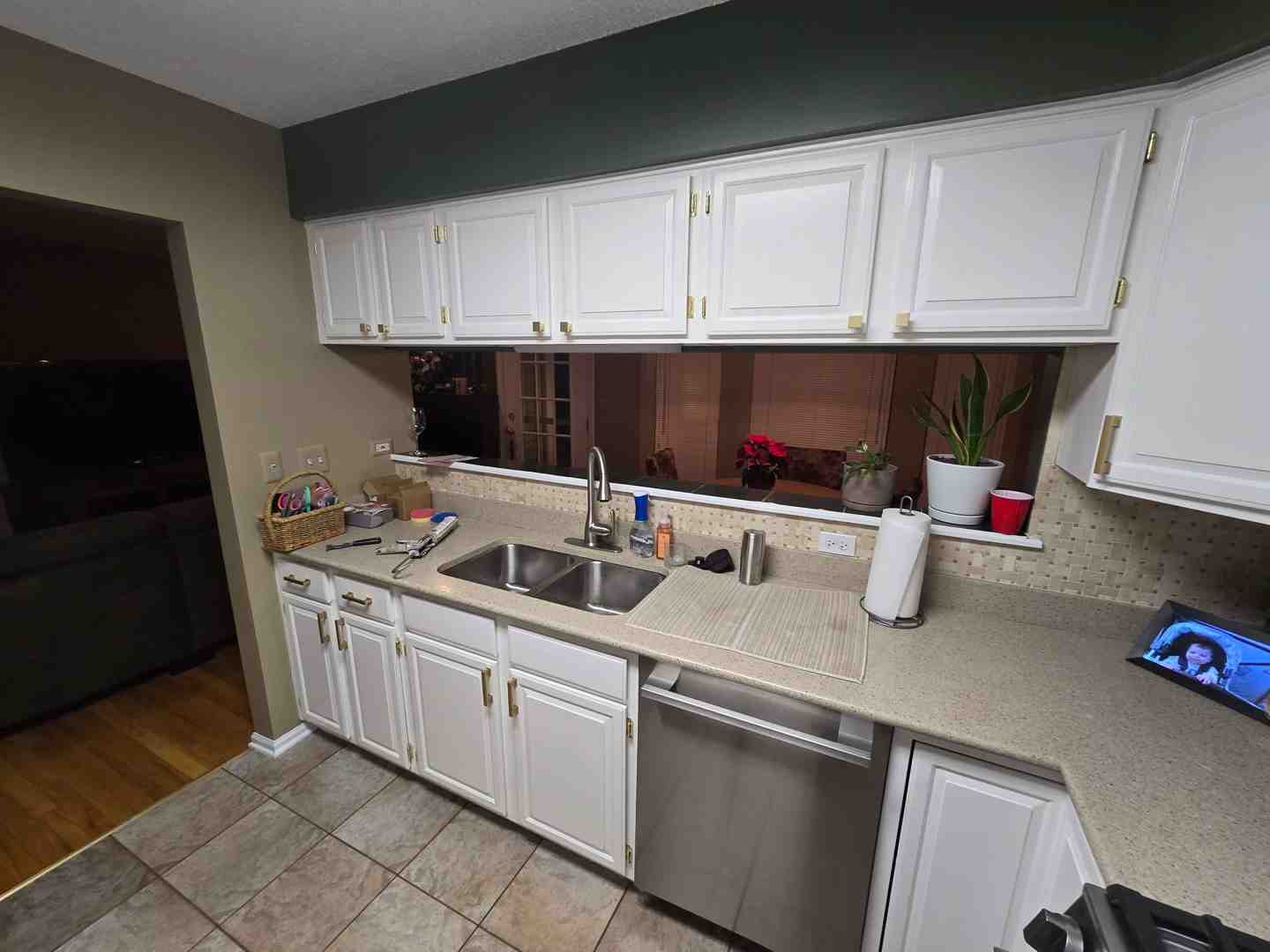
Choosing the Best Paint Finish for Kitchen Cabinets
For most kitchens, the best paint finish for cabinets is satin cabinet enamel. It is easy to wipe down and hides fingerprints and small surface flaws better than shinier finishes. Choose semi-gloss if your cabinets face frequent splashes and scrubbing. Save high-gloss for very smooth doors, since it makes flaws more visible.
I’m Tomasz Niemotko, owner and founder of T&Z Interior And Exterior Painting, a licensed and insured painting contractor founded in 2009 and based at 1101 S Columbine Ave, Lombard, IL 60148. With over 15 years of painting experience, including kitchen cabinet painting, I help homeowners choose the best paint finish for cabinets based on how they use their kitchens.
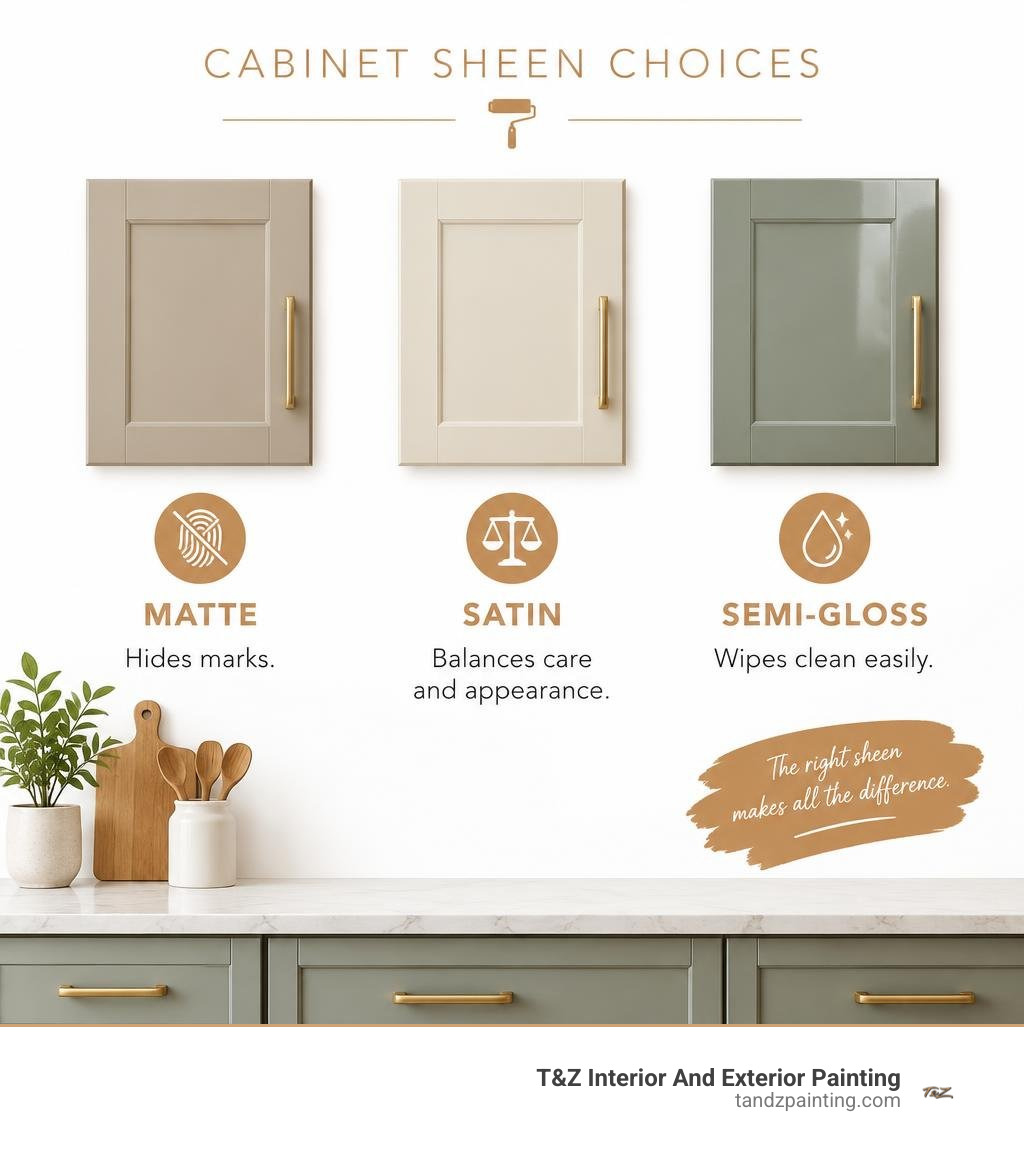
Basic best paint finish for cabinets vocab:
What Is the Best Paint Finish for Cabinets?
Finding the best paint finish for cabinets comes down to balancing light reflection, surface durability, and everyday maintenance. Paint sheen is measured scientifically using Gloss Units (GU) on a scale from 0 (completely flat) to 100 (a mirror-like reflection), measured at a 60-degree angle. For a manufacturer overview of sheen selection, see Sherwin-Williams’ paint finish guide.
When you choose a sheen for your cabinets, you are selecting the ratio of solid resin binders to flat pigment particles in the can. Higher sheen finishes contain a greater concentration of resins. As these resins dry and cure, they form a tight, non-porous film across the cabinet face. This solid film creates a dependable moisture barrier that prevents cooking steam, water splashes, and grease from penetrating into the wood substrate.
Understanding how light bounces off these resins helps eliminate guesswork. You can read our detailed paint sheens 101 guide to see how different formulas behave across various surfaces in the home.
Satin: The Best Paint Finish for Cabinets in Busy Kitchens
Satin finish registers around 20 Gloss Units, delivering a soft, pearlescent luster without harsh glare. For most active households, satin is widely considered the top finish for kitchen cabinetry because it strikes an ideal compromise between durability and aesthetic warmth.
The subtle luster of a satin coating diffuses direct kitchen lighting while masking daily wear. Unlike higher-gloss coatings, satin does an exceptional job hiding fingerprints, minor dents, and subtle brush or roller textures. When dinner prep gets messy, satin serves as a low-maintenance surface in a working kitchen. Everyday tomato sauce splatter, cooking oil, or coffee drips wipe away cleanly using just warm water and a soft microfiber cloth. Homeowners looking to stop the sheen stress and pick the perfect cabinet finish often find that satin gives their kitchen a modern, velvety look that holds up against heavy daily traffic.
Semi-Gloss: Why Many Painters Pick the Best Paint Finish for Cabinets
Semi-gloss enamel registers around 35 Gloss Units and has long been a classic choice for trim, millwork, and high-traffic cabinetry. With a higher concentration of resin binders, semi-gloss creates a slick, exceptionally hard surface shell that repels moisture, sauce splatters, and grease with ease.
If you have a busy home with young children, pets, or heavy daily cooking, you will appreciate how easy it is to scrub semi-gloss surfaces. You can wipe these doors down repeatedly with mild dish soap without worrying about burnishing the paint or wearing away the color. However, because semi-gloss reflects a noticeable amount of light, it highlights any underlying wood grain variations, minor dents, or uneven paint application. Exploring why semi-gloss paint is the secret sauce for your kitchen cabinets can help you decide if its extra scrub resistance matches your household routines.
Comparing Cabinet Paint Sheens: Matte, Satin, Semi-Gloss, and High-Gloss

Choosing between sheens involves weighing aesthetic appeal against practical cleaning demands. Here is how the four primary sheen categories compare across key kitchen performance categories:
| Sheen Level | Gloss Units (GU) | Cleanability | Flaw Concealment | Moisture Resistance | Best Application |
|---|---|---|---|---|---|
| Matte / Eggshell | 5 – 15 GU | Low to Moderate | Excellent | Fair | Display hutches, low-traffic islands, master vanities |
| Satin | 15 – 25 GU | High | Good | High | Active family kitchens, perimeter cabinets, modern shaker doors |
| Semi-Gloss | 30 – 40 GU | Very High | Fair | Very High | Heavy-use kitchens, sink bases, trash pull-outs, classic raised-panel doors |
| High-Gloss | 70 – 85+ GU | Exceptional | Poor (Shows everything) | Maximum | Contemporary flat-panel slab doors, spray-applied modern kitchens |
Matte and Eggshell Sheens
Matte and ultra-matte coatings register between 5 and 15 Gloss Units, absorbing almost all incoming light. While these flat finishes create a velvety designer aesthetic, their microscopic surface texture is naturally porous. In a kitchen environment, airborne cooking oils, grease residue, and sauce splatters settle into this textured surface rather than sitting on top.
Matte cabinets near a cooktop generally require periodic degreasing every 6 to 8 weeks to stop oil buildup from staining the coating. Scrubbing too hard on a flat paint can cause “burnishing”—creating permanent shiny spots where friction polishes the pigment. For this reason, matte and eggshell formulas are best reserved for low-touch built-ins, decorative dining room hutches, or guest bathroom vanities rather than hard-working kitchen cabinets.
High-Gloss Acrylic and Enamels
High-gloss enamels and acrylic coatings reflect 70 to 85+ Gloss Units, producing a mirror-like finish that bounces light around the room. In smaller, narrow kitchens, high-gloss cabinets reflect ambient illumination and make compact spaces feel noticeably more open and airy.
However, high gloss is completely unforgiving. Every slight imperfection in the wood substrate, every dust nib, and every fingerprint will stand out under direct light. High-gloss finishes are not recommended for hand-applied brush or roller projects. They should only be applied to perfectly prepped, ultra-smooth flat-panel doors using professional spray equipment in a controlled environment.
Key Factors When Choosing Your Cabinet Sheen
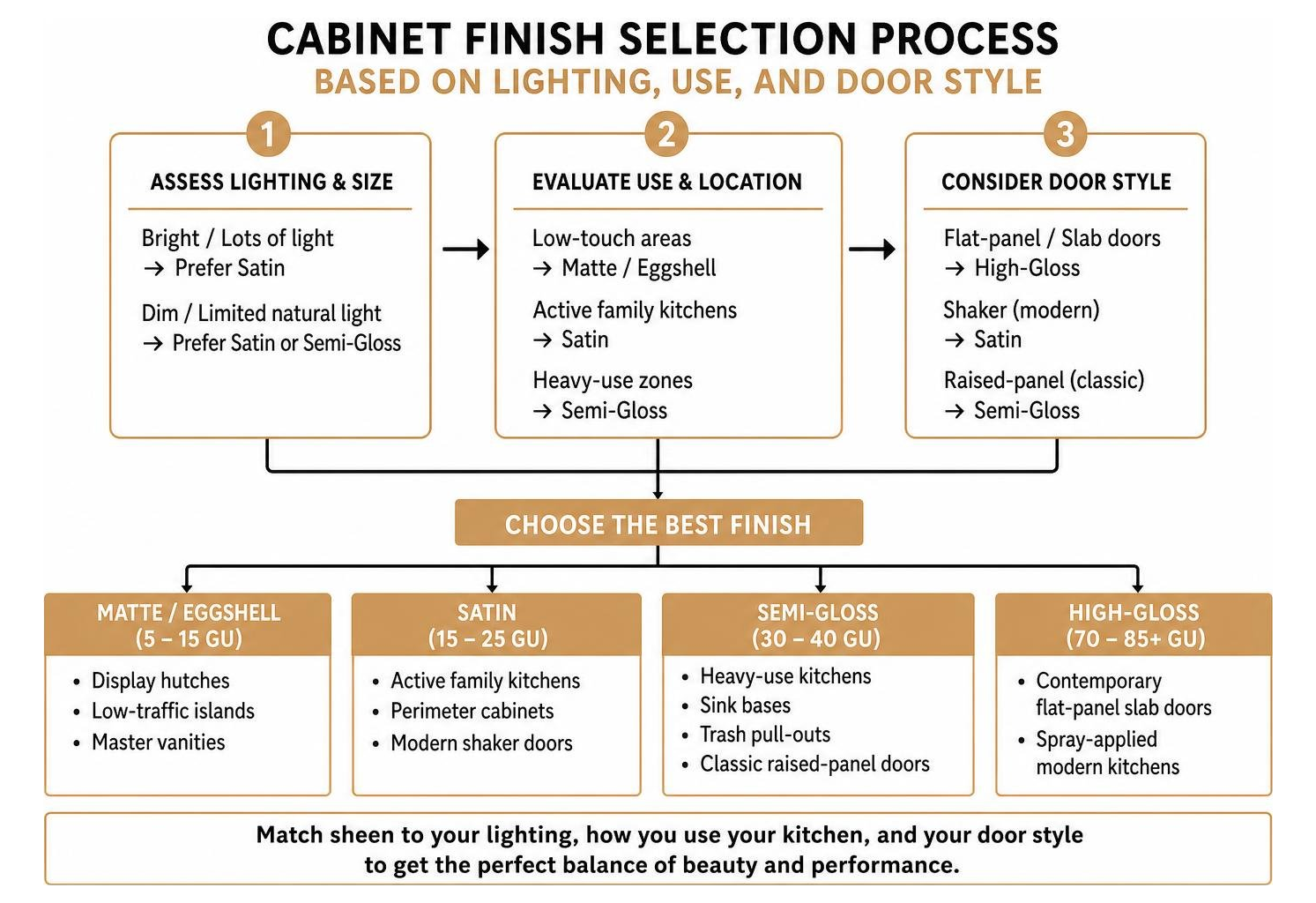
Finding the perfect sheen for your kitchen involves looking at your room’s layout, lighting, and daily cooking habits. Premium enamels perform differently across various spaces, which is why resources like this paint sheens 101 guide examine how top-tier formulas cure across different sheens.
Kitchen Lighting and Size
The amount and angle of light in your kitchen play a major role in how a sheen looks. If your kitchen features large south-facing windows or abundant overhead recessed LED cans, high-sheen surfaces can generate harsh glare and visual hot spots. A satin finish diffuses bright artificial and natural lighting, keeping the space visually comfortable throughout the day.
Conversely, if your kitchen is tucked into an interior layout with limited natural windows, moving up to a semi-gloss or satin finish helps bounce light across countertops and into darker corners, brightening the entire workspace.
Cleaning, Grease, and Daily Maintenance
Think honestly about how your household uses the kitchen. The cabinets directly surrounding the range hood, cooktop, and sink face daily exposure to steam, oil splatters, and soapy dishwater. Semi-gloss provides the highest resistance against continuous scrubbing, making it simple to degrease without dulling the paint.
Satin serves as the easiest all-around option for busy families who want quick wipe-downs without seeing every finger smudge left behind around cabinet handles and drawer pulls.
Wood Grain and Surface Flaws
The type of wood your cabinets are made from also influences your sheen choice:
- Open-Grain Woods (Oak, Ash): These species feature deep, prominent grain patterns. Higher sheens like semi-gloss catch light inside every open valley, accentuating the heavy grain texture. If you want to tone down visible wood grain without applying multiple coats of grain filler, satin is the superior choice.
- Closed-Grain Woods and Synthetics (Maple, Poplar, MDF): Smooth, tight-grained hardwoods and high-density MDF provide a flat surface that looks stunning in satin, semi-gloss, or expertly sprayed high-gloss enamels.
Professional Application Techniques for a Factory-Smooth Finish
Achieving a durable, smooth finish requires careful preparation and the right application tools. To understand the full scope of proper surface prep, degreasing, and coating steps, read through our cabinet painting complete guide.
Spraying vs. Brushing and Rolling
While quality cabinet paints feature self-leveling agents to help settle out brush strokes, application method directly affects your final surface texture.
- HVLP and Airless Spraying: Spraying applies atomized paint droplets in a thin, uniform coat. This method eliminates all brush marks and roller stipple, creating a flawless factory appearance. It is the gold standard for semi-gloss and gloss enamels where surface smoothness is critical.
- Brushing and Rolling: If you are painting cabinets in place without spraying, use a high-density foam roller or a 1/4-inch nap microfiber sleeve alongside an angled sash brush with synthetic filaments. Lay the paint on in thin, even coats, maintaining a wet edge to avoid lap marks. You can review the pros and trade-offs of each approach in our guide on the complete guide to paint vs spray cabinets.
Primer, Enamel Formulas, and Curing Time
Never apply standard wall latex paint to cabinetry. Cabinets require specialized waterborne alkyd or urethane-modified acrylic enamels, such as Benjamin Moore Advance or Sherwin-Williams Emerald Urethane Trim Enamel. These hybrid formulas combine the easy water cleanup and low VOC levels of water-based paints with the rock-hard durability and leveling characteristics of traditional oil-based coatings. Real-world long-term reviews from major home publications show that these specialized resin systems maintain their bond and resist chipping over years of daily handling.
Preparation is just as critical as the paint itself:
- Clean and Degrease: Scrub all surfaces with a heavy-duty degreaser to remove cooking residues and skin oils.
- Scuff Sand: Sand surfaces with 220-grit sandpaper to break any existing factory clear coat and create a mechanical profile for adhesion.
- Bonding Primer: Apply a dedicated bonding primer (such as an enamel undercoater or shellac-based primer) to prevent wood tannins from bleeding through and lock the new finish to the substrate.
- Sand Between Coats: Lightly scuff sand with 220-grit or 320-grit sandpaper between coats to knock down dust nibs and grain rise, ensuring an ultra-smooth final topcoat.
Frequently Asked Questions About Cabinet Paint Finishes
Can you use matte or eggshell finish on kitchen cabinets?
While you can technically apply matte or eggshell paint to cabinets, it is generally not recommended for busy cooking spaces. The porous structure of lower sheens absorbs airborne oils and grease splatters, requiring frequent degreasing that can burnish or discolor the paint film. If you love the ultra-flat aesthetic, consider using a specialized matte cabinet enamel formulated with hardened ceramic microspheres, or apply it strictly to low-traffic accent areas, display hutches, or bathroom vanities.
How does paint sheen affect cabinet durability and scratch resistance?
Paint sheen is tied directly to resin content. Glossier finishes contain a higher ratio of resin binders to pigments, resulting in a tighter, harder, and less porous surface film upon curing. This dense resin shell offers greater resistance to moisture penetration, surface scuffs, and chemical cleaning agents. Lower sheens contain higher pigment-to-binder ratios, making them slightly softer and more susceptible to surface abrasion under heavy scrubbing.
How long does cabinet enamel take to fully cure?
There is an important difference between dry time and cure time. Most waterborne alkyd and urethane enamels dry to the touch within 2 to 4 hours and can be recoated after 4 to 16 hours. However, reaching full chemical cure—where the resins cross-link to achieve maximum hardness and scratch resistance—takes 14 to 30 days. During the first few weeks after painting, treat your cabinet doors gently, avoid aggressive scrubbing, and take care when opening and closing doors to prevent premature chipping.
Conclusion
Choosing the right paint sheen transforms your kitchen cabinets, giving you a balance of visual appeal and long-lasting protection. Satin enamel remains the most popular choice for modern kitchens due to its ability to hide fingerprints while handling everyday messes with ease. If your priority is maximum scrubbability and moisture resistance, semi-gloss provides a tough, dependable shield for hard-working spaces.
At T&Z Interior And Exterior Painting, we help homeowners across the western Chicago suburbs achieve smooth, long-lasting cabinet transformations. Founded in 2009 by Tomasz Niemotko, our local team brings over 15 years of hands-on painting experience to every project. We are a licensed and insured contractor, BBB accredited, hold a 5.0 Google rating with 85+ reviews, and back our workmanship with a 2-year warranty.
We proudly serve homeowners throughout Lombard, Glen Ellyn, Villa Park, Oak Brook, Oakbrook Terrace, Downers Grove, Wheaton, Elmhurst, Addison, Itasca, Roselle, Bloomingdale, Carol Stream, Wood Dale, Westmont, Bensenville, Berkeley, Hillside, Schiller Park, Glendale Heights, Schaumburg, and Chicago.
If you are ready to update your kitchen with smooth, factory-grade finishes, explore our professional cabinet painting services. Contact T&Z Interior And Exterior Painting today by calling (224) 240-0054 or visit tandzpainting.com to request your free estimate.