
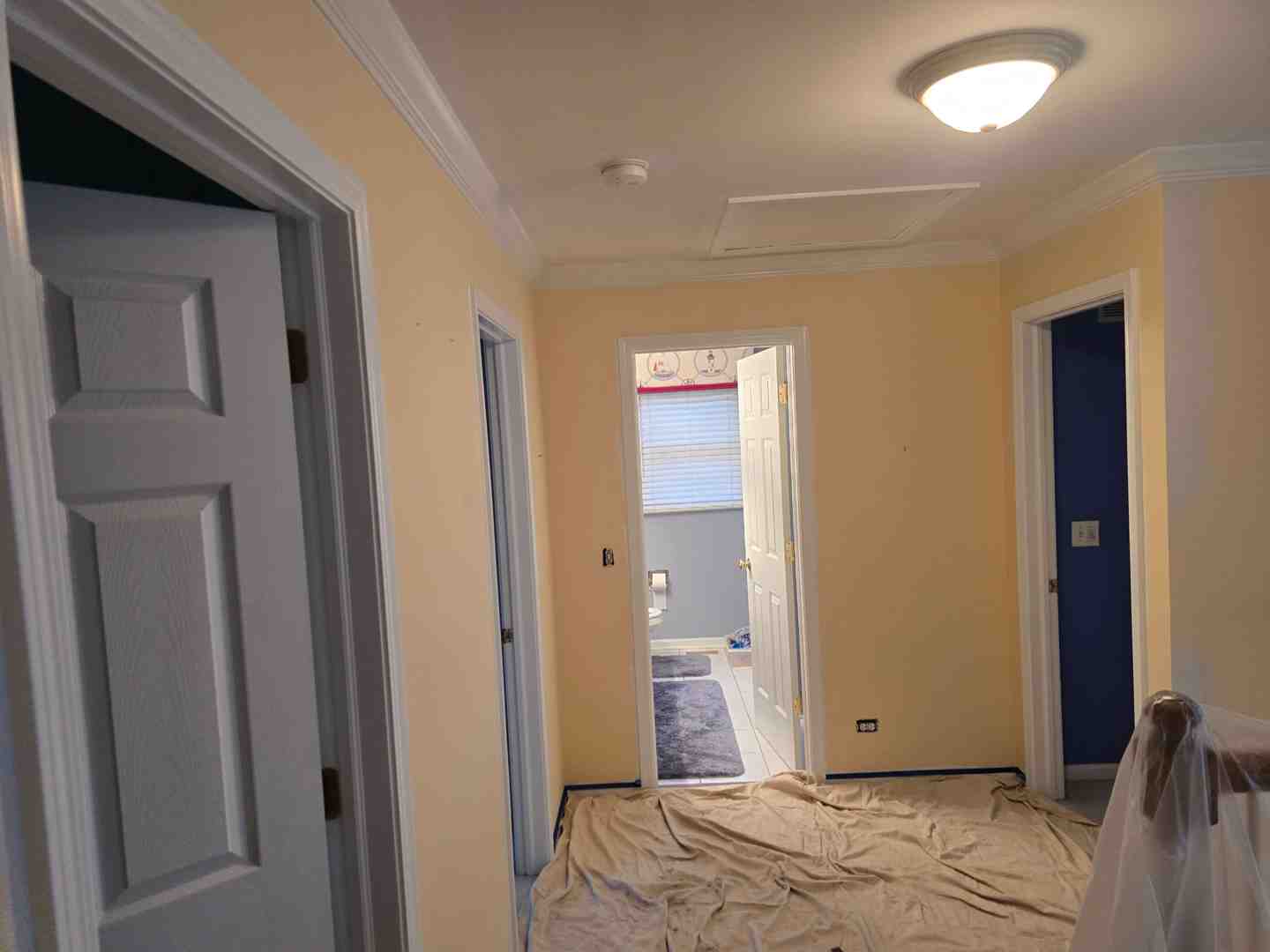
Choose Colors That Make a Small Guest Room Feel Open and Restful
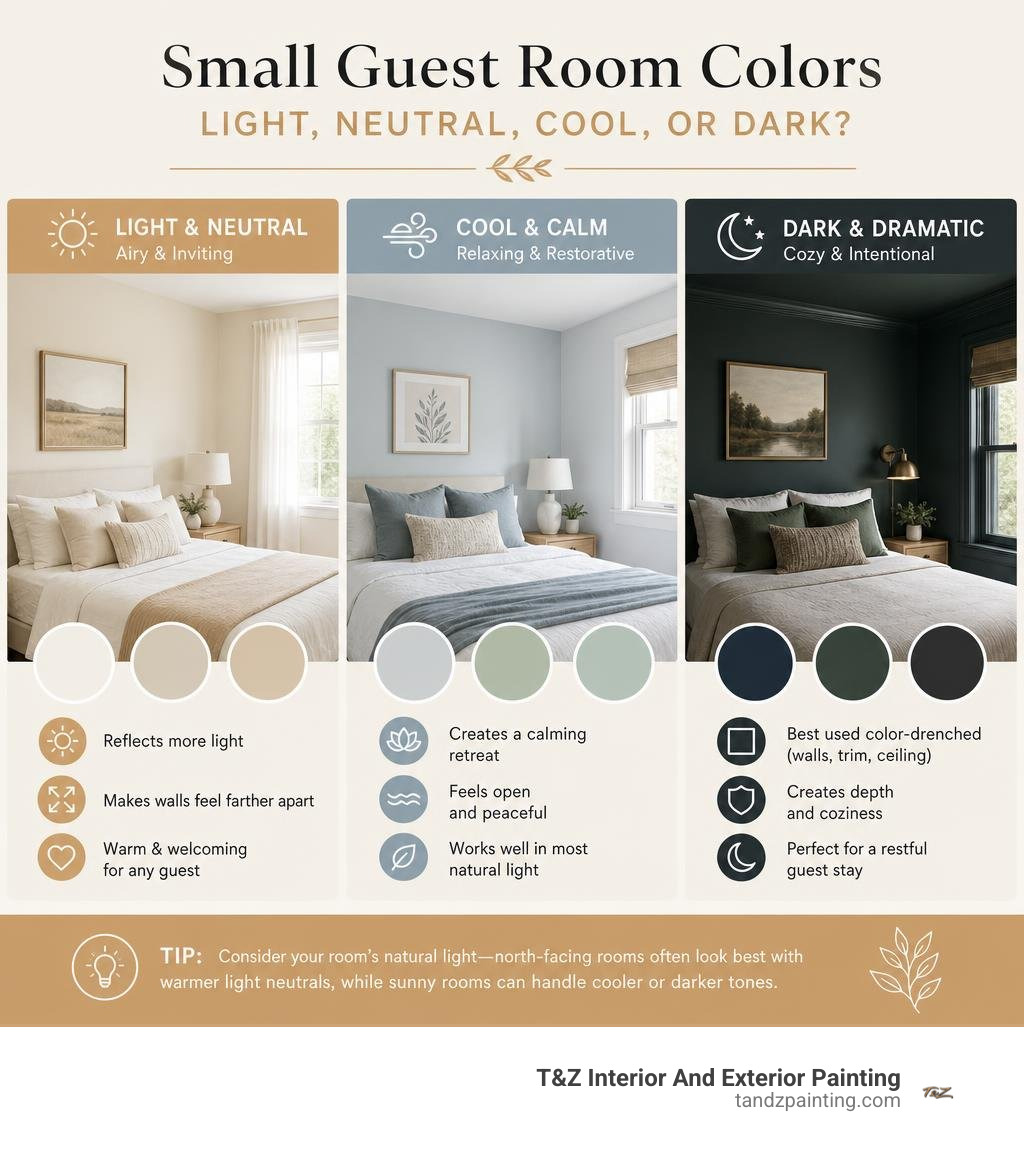
The best small guest room colors are light, softly muted shades that reflect available light and reduce hard visual edges. Start with one of these dependable directions:
- Warm off-white or light greige for an airy room that still feels inviting.
- Pale blue-gray, soft sage, or muted mint for a calm, open look.
- A deep navy, green, or charcoal only when color-drenched across walls, trim, and possibly the ceiling to create intentional depth instead of visual clutter.
Color changes how guests read the room before they unpack. Light colors can make walls seem farther apart, while warm neutrals prevent a compact bedroom from feeling cold or clinical. The right choice also depends on the room’s natural light: north-facing spaces usually benefit from warmer undertones, while sunny rooms can handle cooler shades.
Tomasz Niemotko has more than 15 years of experience helping homeowners choose and apply small guest room colors through T&Z Interior And Exterior Painting, a licensed and insured painting company serving Lombard, Itasca, Addison, Glen Ellyn, Oak Brook, and surrounding towns. Backed by a 5.0 Google Reviews rating, Tomasz and the T&Z team focus on clean work, careful preparation, and reliable interior painting results.
Essential small guest room colors terms:
How Natural Light and Room Orientation Dictate Color Choices
Natural sunlight is the most influential element in determining how paint behaves inside an enclosed interior space. A shade that appears soft and warm in a showroom can easily look cold, sterile, or shadowy on a compact bedroom wall depending on window placement.
When selecting calming colors for small bedrooms, light orientation dictates how the eye perceives space and dimension:
- North-Facing Rooms: These spaces receive cool, indirect natural light with subtle blue undertones. Cool grays or stark whites in north-facing guest rooms can look dingy or shadowy. Instead, choose shades with warm, creamy, or subtle pink undertones to counteract cool shadows and create a welcoming glow.
- South-Facing Rooms: Blessed with abundant, warm sunlight throughout the day, south-facing spaces allow both warm and cool palettes to thrive. Soft blues, watery aquas, and muted moss greens look crisp and airy under intense southern sun.
- East-Facing Rooms: These rooms experience bright, warm light at dawn that transitions into cooler tones by afternoon. Balanced neutrals and gentle pastels adjust smoothly to these shifting light levels.
- West-Facing Rooms: Morning light in west-facing spaces can feel dull, but late afternoon brings rich, fiery golden light. Earthy neutrals, muted terracottas, and balanced greiges keep walls stable without appearing overly saturated during sunset.
Understanding Light Reflectance Value (LRV) helps guide your selection. LRV measures the percentage of visible light a paint color reflects on a scale from 0 (pure black) to 100 (pure white). In smaller guest rooms, opting for an LRV of 60 or higher helps maximize ambient light bounce, brightening dark corners.

Evaluating Undertones Under Different Light Sources
Artificial lighting shifts paint undertones just as dramatically as the sun. In many homes across Lombard, Elmhurst, and Glen Ellyn, small guest rooms often feature a single overhead ceiling fixture or small bedside lamps.
Light bulb color temperature—measured in Kelvin (K)—drastically influences wall color:
- 2700K (Warm White): Enhances red, yellow, and beige undertones while dulling cool blues and crisp greens.
- 3000K (Soft White): A versatile, balanced residential choice that flatters both warm neutrals and soft earth tones.
- 4000K to 5000K (Daylight): Emits crisp, blue-toned illumination that enhances cool hues but can make delicate warm creams appear slightly stark.
Always apply large test swatches to at least two different walls. Observe how the shade responds during morning light, afternoon shade, and under artificial nighttime lamps before committing to full application.
Top Designer-Approved Small Guest Room Colors to Maximize Space

Selecting an intentional palette establishes an upscale, boutique-hotel aesthetic that makes visiting friends and family feel pampered. When paired with smart styling, curated shades can visually push back boundaries. Exploring 12 Small Bedroom Color Ideas That Open the Room Fast – Appliance Realm demonstrates how strategic hues give compact rooms a functional, expansive feel.
| Color Family | Representative Shades | Average LRV | Best Lighting Conditions | Room Atmosphere |
|---|---|---|---|---|
| Warm Neutrals | Sherwin-Williams Neutral Ground, BM Revere Pewter | 55–75 | North & East-facing rooms | Cozy, grounded, welcoming |
| Cool Pastels | Sherwin-Williams Sea Salt, BM Palladian Blue | 60–72 | South & West-facing rooms | Airy, serene, expansive |
| Soft Off-Whites | Benjamin Moore Simply White, BM Cloud White | 80–90 | Low-light or compact spaces | Clean, spacious, bright |
| Deep & Moody | Benjamin Moore Hale Navy, Farrow & Ball Hague Blue | 8–15 | Any room (with ample lamps) | Enveloping, tailored, luxurious |
Calming and Neutral Small Guest Room Colors
Warm neutrals, gentle off-whites, and balanced greiges serve as versatile foundations for guest suites. Unlike stark clinical whites, warm neutrals offer comfort while keeping walls bright and reflective.
Homeowners often find inspiration in a cohesive Calm Guest Bedroom Palette — Soft Beige & Gentle Blue | CompositePaint, which pairs a soft beige main wall with gentle blue textiles and crisp white trim.
- Benjamin Moore Revere Pewter (HC-172): An iconic light greige that bridges warm beige and modern gray, adapting seamlessly to changing light conditions.
- Sherwin-Williams Neutral Ground (SW 7568): A warm, nuanced off-white that creates a cozy ambiance without leaning yellow or heavy.
- Farrow & Ball Skimming Stone (No. 241): A warm stone shade that softens hard corners and visually blurs wall boundaries.
Refreshing Cool Hues and Pastels
Cool colors are naturally recessive, meaning they visually appear to move away from the viewer. This optical characteristic makes pale blues, soft aquas, and muted mint greens ideal for narrow layouts. Our team’s guide to cool blues for small bedrooms highlights how these tones create serene, restorative rest areas.
- Sherwin-Williams Sea Salt (SW 6204): A soft green-blue with gray undertones that transforms depending on natural light, delivering an airy coastal look.
- Benjamin Moore Morning Sky (1444): A balanced, pale sky blue that introduces a breezy quality into sun-filled southern bedrooms.
- Soft Lavender: A delicate, muted purple tone that provides subtle color while reflecting natural daylight.
Bold and Moody Small Guest Room Colors That Work
While light colors reflect illumination, deeply saturated tones create an intentional, cocoon-like retreat. Applying a rich color across a compact space removes harsh boundary shadows, making corner intersections visually recede.
- Benjamin Moore Hale Navy (HC-154): A classic navy that adds tailored elegance when paired with crisp white linens and warm brass fixtures.
- Farrow & Ball Hague Blue (No. 30): A deep, rich blue with subtle green undertones that lends depth and luxury to evening spaces.
- Deep Forest Green: Muted nature greens turn compact rooms into grounding, tranquil hideaways.
Innovative Painting Techniques for Compact Guest Spaces
Applying paint across a small room involves more than rolling a single color on four flat walls. Intentional techniques can reshape how visitors perceive ceiling height, wall depth, and architectural millwork. Exploring 25 Luxe Color-Drenching Ideas For Small Bedrooms shows how unifying architectural elements elevates smaller footprints.
Full Color Drenching Walls, Trim, and Ceilings
Color drenching involves painting the walls, baseboards, door frames, crown molding, and ceiling in a single cohesive shade. In a traditional room, high-contrast white baseboards and trim create distinct visual borders that highlight the room’s compact perimeter.
By wrapping every surface in the same paint color, those visual borderlines disappear. The eye moves smoothly across the space without interruption, making corners softer and ceilings appear taller. Homeowners comparing spatial improvements can explore 10 painting ideas for small houses compared to evaluate how monochromatic finishes compare against multi-tone layouts.
Fifth Wall Magic and Painted Accents
The ceiling—often called the “fifth wall”—is an effective canvas for altering perceived room dimensions:
- Ceiling Lift: Painting the ceiling one to two shades lighter than the walls draws the eye upward, giving low ceilings a higher feel.
- “Feign-Scoting”: Using paint color blocking to mimic traditional wainscoting adds architectural interest without sacrificing floor space to wood trim.
- Painted Bed Niches: Applying a deeper accent tone directly behind the headboard grounds the bed, adding dimension to the layout.
Carefully selecting the best paint combination for house interiors ensures that accent walls harmonize with adjoining hallways and common living areas.
Coordinating Paint Finishes, Storage, and Decor
A well-planned guest room balances color choices with proper sheen levels, practical storage, and layered textures. Selecting proven paint colors for better sleep creates a quiet environment where visitors can rest comfortably.
Sheen Strategies for Small Bedrooms
- Walls (Eggshell Finish): Offers a soft, low-luster sheen that reflects subtle light without highlighting drywall imperfections, providing both durability and easy wipe-down maintenance.
- Trim & Doors (Satin or Semi-Gloss): Provides durable protection against luggage scuffs while creating subtle textural contrast against eggshell walls.
- Ceilings (Flat or Matte Finish): Minimizes glare from overhead light fixtures and hides minor surface irregularities.
Integrating Multi-Functional Furniture and Textures
- Built-In and Floating Storage: Paint floating nightstands, corner shelves, or wardrobe cabinetry in the exact shade of the surrounding walls to help large storage units blend into the background.
- Low-Profile Frames: Keep bed frames and seating low to preserve uninterrupted sightlines from the doorway.
- Layered Natural Textures: Balance painted surfaces with oatmeal linen drapery, light white oak nightstands, woven jute area rugs, and breathable cotton bedding to add tactile warmth.
Guest Bedroom Paint Colors and Mistakes to Avoid
- Pure Brilliant White: Can look stark, clinical, and shadowy in rooms lacking southern exposure.
- High-Saturated Reds and Neons: Overly stimulating shades elevate heart rates, disrupting restful sleep for visitors.
- Single-Coat Paint Coverage: Skipping a second coat leaves streaky patches that become noticeable in close quarters.
- Overcrowded Surfaces: Keep open shelving organized with empty visual negative space so the room feels light and uncluttered.
Frequently Asked Questions About Small Guest Bedroom Colors
What paint color makes a small guest room look the biggest?
Light, cool-toned paints with a high Light Reflectance Value (LRV 65+)—such as pale blue-gray, soft sage, and warm off-white—make small rooms appear largest. Cool hues visually recede, giving the impression that opposing walls sit further apart.
Should small guest room ceilings be painted lighter than the walls?
Yes. Painting the ceiling a crisp white or a 20% lighter tint of the wall color draws the eye upward and expands vertical space. Alternatively, full color drenching—coating the ceiling in the exact wall color—blurs perimeter boundaries and works well with muted or mid-tone hues.
What paint finish is most practical for guest bedrooms?
An eggshell finish on the walls paired with satin or semi-gloss on trim and doors offers the ideal balance. Eggshell provides soft light diffusion and washability, while semi-gloss protects high-touch doors and baseboards from frequent suitcase scuffs.
Conclusion
Creating a welcoming, restful guest bedroom comes down to understanding lighting, selecting balanced undertones, and applying paint with clean precision. Whether you prefer the bright airiness of soft off-white or the luxury of a color-drenched retreat, a thoughtful color palette turns compact guest spaces into inviting rooms your visitors will appreciate.
At T&Z Interior And Exterior Painting, Tomasz Niemotko brings over 15 years of industry experience to residential painting projects across Lombard, Itasca, Addison, Glen Ellyn, Oak Brook, and surrounding communities. As a fully licensed and insured painting contractor backed by a 5.0 Google Reviews rating, our experienced crews utilize premium materials and detailed preparation to transform interior spaces.
Explore our professional guidance on solving small house painting challenges to help plan your next interior home improvement project.