
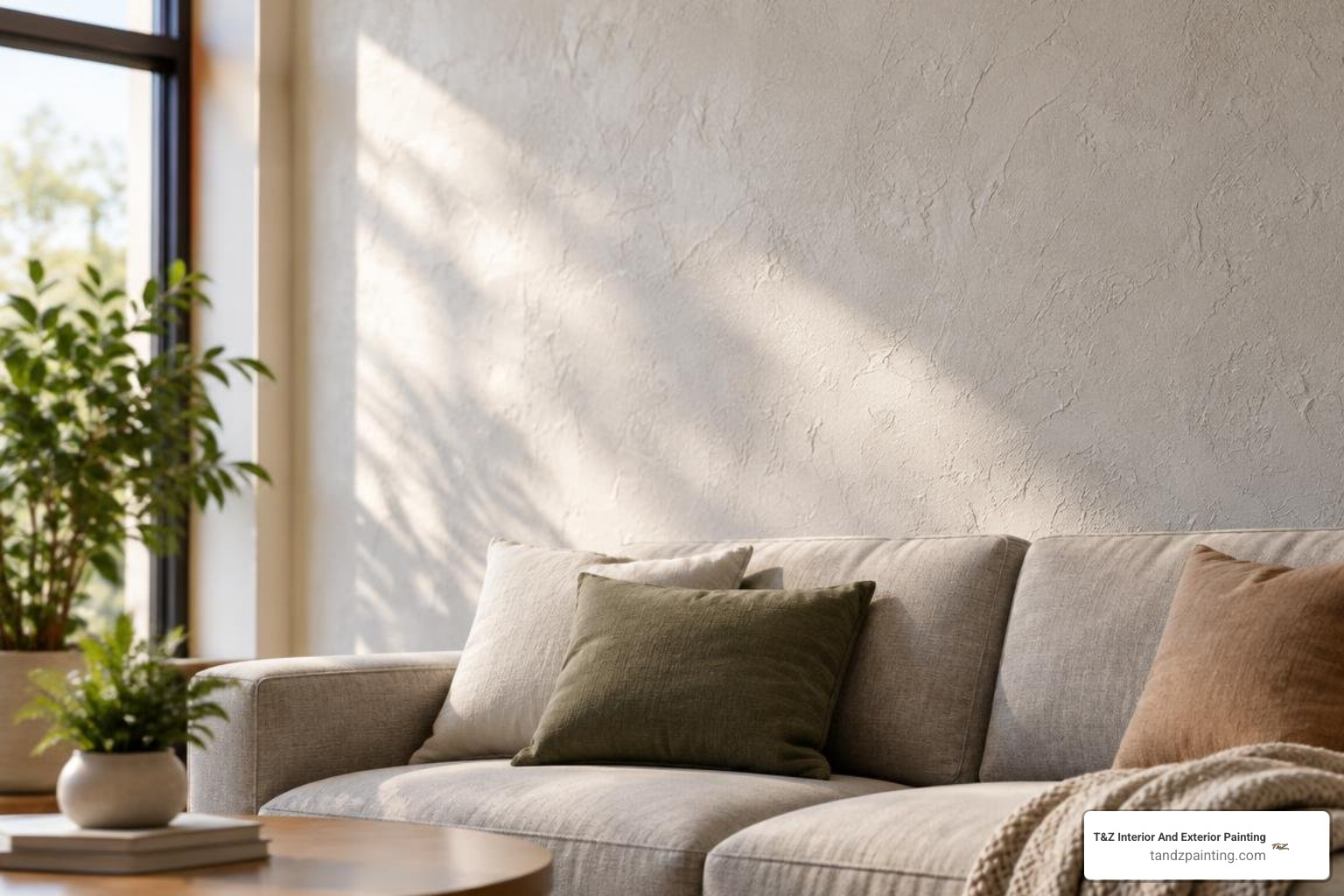
Textured Wall Finishes for Every Room
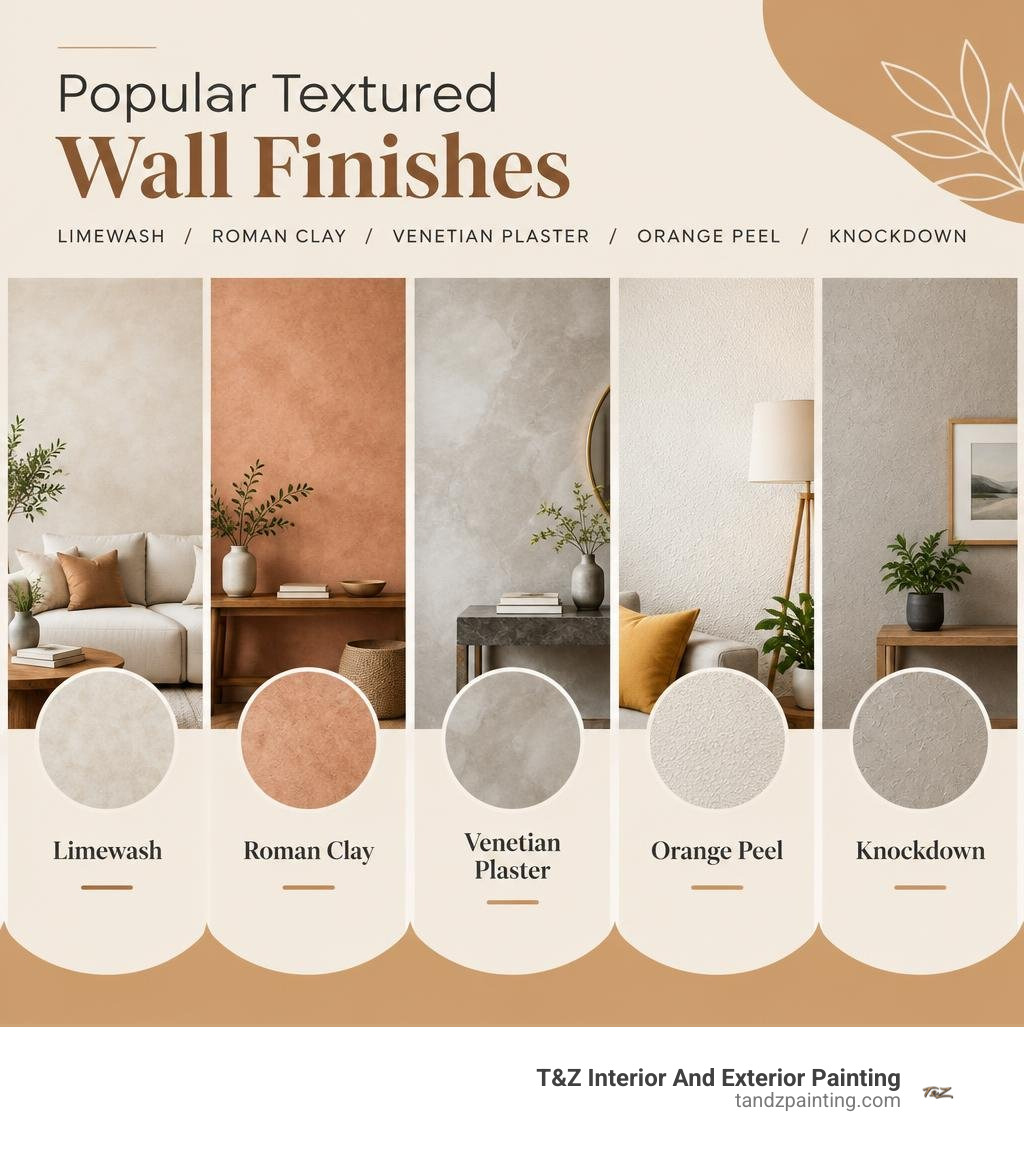
Textured wall finishes add depth and character that flat paint cannot. For a soft, matte look, consider limewash or Roman clay. Venetian plaster creates a polished, stone-like surface, while orange peel and knockdown offer subtle texture that can hide minor drywall flaws. In bathrooms and other wet areas, avoid unsealed, porous finishes; choose a finish made for moisture exposure instead.
The right choice depends on the room, the light, and how much upkeep you want. A small sample on your wall can show how the texture looks throughout the day.
I’m Tomasz Niemotko, founder of T&Z Interior And Exterior Painting, a licensed and insured painting contractor founded in 2009 and based at 1101 S Columbine Ave, Lombard, IL 60148. My over 15 years of experience in interior painting, drywall repair, and decorative finishes helps me guide homeowners through their textured wall finishes options.
Explore more about textured wall finishes:
Popular Modern Textured Wall Finishes for Interior Spaces
Interior design has moved decisively away from flat, one-dimensional drywall surfaces. Homeowners are increasingly seeking tactile surfaces that provide architectural character, warmth, and organic movement. Rather than relying solely on color changes, incorporating dimensional wall treatments allows a room to interact dynamically with natural and artificial lighting.
From artisanal mineral plasters to classic drywall textures and advanced specialty coatings and textured painting, textured surfaces offer an effective way to customize living spaces. Understanding the differences among these techniques ensures you select the best application for your space.
Artisanal Plasters and Mineral Textured Wall Finishes
Mineral and plaster finishes have seen significant growth in popularity because of their rich visual movement and natural composition. These hand-applied treatments create unique, mottled appearances that cannot be replicated with standard rolled paint.
- Limewash: Made from slaked lime, water, and natural pigments, limewash creates a soft, chalky, suede-like appearance. As it cures, it calcifies on the surface, producing a breathable, velvety finish with subtle tonal variations.
- Venetian Plaster: Composed of slaked lime mixed with finely ground marble dust, this traditional plaster is applied in multiple thin layers using a steel trowel. The final layer is burnished to compress the material, resulting in a smooth, high-sheen surface with deep visual dimension reminiscent of polished natural stone.
- Roman Clay: Similar in feel to plaster but formulated for smoother, low-sheen interior applications, Roman clay provides an organic, matte movement ideal for bedrooms and living rooms.
- Micro-Cement: Applied in thin coats of 2 to 3 millimeters, micro-cement provides an ultra-durable, seamless surface that mimics cast concrete. It creates a modern, industrial finish that adheres securely to existing drywall, concrete, or tiled surfaces.
- Tadelakt: A traditional Moroccan lime plaster that is polished with hard river stones and treated with olive oil soap. This chemical reaction creates a water-resistant, seamless mineral surface historically used in traditional hammams and modern wet rooms.
These hand-troweled techniques provide an elevated aesthetic through custom decorative faux finishes that add lasting value to home interiors.
Classic Drywall and Applied Textured Wall Finishes
Drywall textures, applied using joint compound and specialized sprayers or hand tools, remain common in residential construction. These finishes provide visual interest while effectively concealing minor surface flaws and seams in drywall installations.
- Orange Peel: As the most common drywall texture in modern construction, orange peel features a subtle, dimpled surface created by spraying thinned joint compound at high pressure without flattening the droplets.
- Knockdown: Created by spraying joint compound onto the wall, waiting roughly 10 to 15 minutes for the material to partially set, and then lightly dragging a wide drywall knife over the surface to flatten the peaks. This produces a mottled, Mediterranean-style profile.
- Skip Trowel: Applied by hand using a curved drywall trowel held at a shallow angle. As the trowel moves across the surface, it deposits small, irregular patches of compound while skipping across others, creating an understated texture.
- Slap Brush (Stomp Texture): Joint compound is rolled onto the wall and textured by stamping or slapping a stiff-bristled brush into the wet mud to leave raised, radial ridges.
Homeowners can explore the wide variety of profiles in this guide to 11 types of wall texture and how to create each in your home to match their home’s architectural style.
Dimensional and Faux Stone Wall Treatments
Dimensional finishes use decorative painting techniques and specialized compounds to replicate heavier architectural materials like poured concrete or solid marble slabs without structural modifications.
A faux concrete wall finish creates a clean, industrial loft aesthetic by layering gray-toned plasters and distressing the surface with trowels and sponges. Similarly, homeowners can transform plain walls with realistic marble effect paint to achieve the veining, translucence, and depth of real stone at a fraction of the weight and structural burden.
Performance, Durability, and Application Considerations
Selecting the proper textured wall finish requires balancing visual appeal with long-term durability, cleanability, and moisture exposure.
| Finish Type | Durability | Moisture Resistance | Application Complexity | Average Lifespan |
|---|---|---|---|---|
| Limewash | Moderate | Low (Requires Sealer) | Moderate (DIY-Friendly) | 5–8 Years |
| Venetian Plaster | High | Moderate to High (When Waxed) | Advanced (Artisan Required) | 15–25 Years |
| Micro-Cement | Very High | High (Fully Waterproof When Sealed) | Advanced (Professional Only) | 20+ Years |
| Knockdown Texture | High | Low to Moderate (Standard Paint Dependent) | Moderate (Specialized Tools) | 10–15 Years |
Textured Paint vs Specialty Plaster Finishes
When planning an interior update, homeowners often choose between standard textured paints and specialty mineral plasters.
Textured paint consists of a standard latex base containing premixed aggregates such as fine silica sand, perlite, or mica particles. You can learn more about its composition in this overview on what to know about textured paint. Textured paint is relatively simple to roll onto drywall and helps conceal substrate imperfections. However, standard textured paints have a more uniform, rough feel and can be difficult to patch seamlessly if scraped.
Specialty plaster finishes, like limewash and Roman clay, use mineral binders and natural pigments. Rather than relying on physical sand particles, they achieve texture through chemical curing, layering, and troweling techniques. Plasters offer greater visual depth, a smooth, organic feel, and superior longevity when properly applied.
Acoustic and Lighting Impacts of Textured Walls
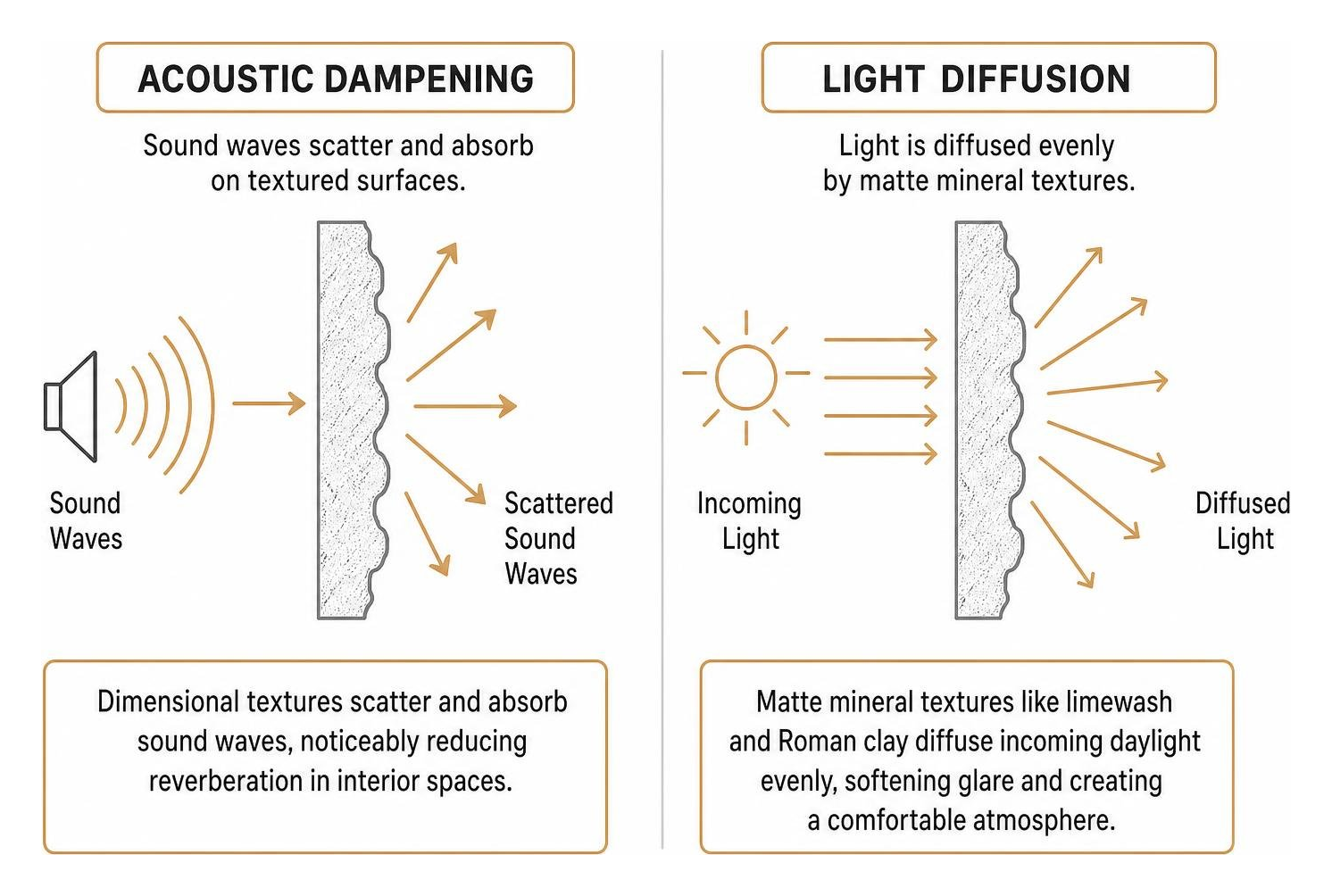
Beyond their visual qualities, textured surfaces affect the physics of an interior space:
- Acoustic Dampening: Flat, hard drywall surfaces bounce sound waves directly across a room, creating echo. Dimensional textures scatter and absorb sound waves, noticeably reducing reverberation in open-concept living rooms, hallways, and home offices.
- Light Diffusion: Matte mineral textures like limewash and Roman clay diffuse incoming daylight evenly, softening glare and creating a comfortable atmosphere.
- Grazing Shadow Play: When illuminated by directional light, such as recessed ceiling lights or wall sconces, raised textures create subtle micro-shadows that highlight the craftsmanship of the wall.
Best Textured Finishes by Room and Environment
Every room has distinct functional demands. Matching your textured finish to the room’s environmental conditions ensures both aesthetic appeal and long-term performance.
Strategic planning is essential when incorporating textured finishes, and our guide on accent walls decorative painting integration outlines how to balance focal surfaces with surrounding smooth walls.
Living Rooms, Bedrooms, and Entryways
Dry, climate-controlled spaces are well-suited for delicate, breathable mineral finishes:
- Bedrooms: Limewash and Roman clay create a restful, matte finish that promotes a calm environment.
- Living Rooms: A Venetian plaster fireplace surround or a knockdown feature wall adds architectural interest without overwhelming the furniture layout.
- Entryways: Durable hand-troweled plasters resist scuffs from daily foot traffic while leaving a strong first impression.
Bathrooms, Kitchens, and High-Moisture Areas
High-humidity rooms require finishes that resist moisture absorption, steam, and water splashes:
- Micro-Cement: Because it forms a dense, non-porous barrier when properly sealed, micro-cement works well for bathroom walls, powder room backsplashes, and shower surrounds.
- Tadelakt: This lime plaster reacts with olive oil soap to create an impermeable, water-repellent surface designed specifically for wet areas.
- Finishes to Avoid: Unsealed drywall textures (such as standard orange peel or popcorn), raw limewash, and unsealed clay plasters should not be used inside high-moisture shower zones, as moisture can soften the binders and lead to peeling or mold growth.
Surface Preparation, Repair, and Maintenance
Proper surface preparation is essential for a clean, durable textured finish.
- Substrate Cleaning: Wash walls thoroughly to remove dirt, grease, and dust.
- Repair and Patching: Fill all nail holes, gouges, and deep cracks with setting-type drywall compound, sanding smooth once cured.
- Priming:
- For standard drywall textures, use a high-quality PVA drywall primer.
- For limewash and mineral plasters, apply a dedicated mineral bonding primer containing fine quartz grit to ensure the plaster adheres properly.
- Maintenance:
- Dusting: Clean textured walls periodically using a soft brush attachment on a vacuum or a microfiber duster.
- Spot Cleaning: Wipe sealed plaster surfaces gently with a damp cloth and mild dish soap; avoid abrasive scouring pads and harsh chemical cleaners.
- Repairing Damage: To repair localized damage on drywall textures, apply aerosol spray texture or a small amount of thinned joint compound using a sponge, feathering the edges to blend with the existing wall before repainting.
Frequently Asked Questions About Textured Wall Finishes
Can textured finishes be applied over existing painted drywall?
Yes, most textured finishes can be applied over painted drywall with proper surface preparation. Glossy or semi-gloss surfaces must be scuff-sanded with 120-grit sandpaper to create mechanical grip. After removing dust, apply a high-adhesion bonding primer before troweling plaster or spraying joint compound.
What is the easiest textured wall technique for a DIY beginner?
Limewash is generally the most accessible textured finish for beginners. It is applied using a wide masonry brush in overlapping cross-hatch or figure-eight motions. Unlike troweled plasters that require precise blade pressure and burnishing, limewash flows easily and allows you to adjust the visual movement as you work.
What eco-friendly and sustainable textured options are available?
Natural lime and earth-based clay plasters are among the most sustainable wall finishes available. They are naturally zero-VOC, non-toxic, and free from synthetic petrochemical binders. Because they are vapor-permeable, mineral plasters allow walls to breathe, naturally helping regulate indoor humidity levels.
Conclusion
Choosing the right textured wall finish can bring depth, tactile warmth, and distinct character to any room in your home. Whether you want the subtle motion of brushed limewash, the refined sheen of polished Venetian plaster, or the classic durability of knockdown drywall, proper surface preparation and skilled application are key to achieving long-lasting results.
At T&Z Interior And Exterior Painting, our local team brings over 15 years of hands-on experience to every project. Founded in 2009 by Tomasz Niemotko, we are a fully licensed and insured painting contractor based at 1101 S Columbine Ave, Lombard, IL 60148. We take pride in delivering clean, dependable craftsmanship supported by our 2-year warranty on all work.
Our comprehensive interior painting services cover everything from drywall preparation and repair to custom textured applications and accent walls. We serve homeowners throughout Lombard and surrounding communities including Glen Ellyn, Wheaton, Downers Grove, Elmhurst, Oak Brook, Schaumburg, and Chicago.
Ready to enhance your home’s interior with professional craftsmanship? Visit tandzpainting.com to request a free estimate or call our team today at (224) 240-0054.