
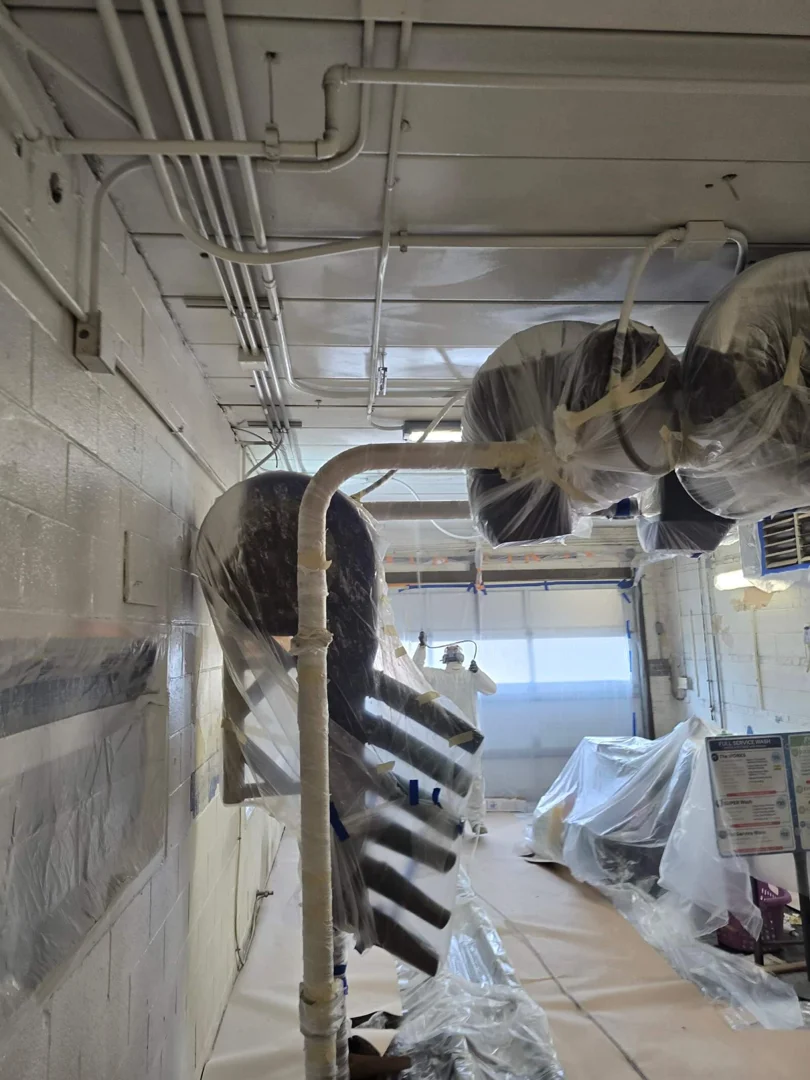
Choosing the Right Commercial Metal Spray Application in Lombard
For commercial metal in Lombard, start with the surface and the problem you need to solve. Thermal spray adds a metal layer to parts that need wear or heat resistance. Spray-applied paint and specialty coatings protect building metal from rust and weather. They are different processes, so ask providers which one they perform before comparing quotes. Share the surface condition, exposure, and any required coating standard.
I’m Tomasz Niemotko, and this guide to commercial metal spray application in Lombard draws on more than 15 years of local residential and commercial painting experience. At T&Z Interior And Exterior Painting, we serve Lombard, Itasca, Addison, Glen Ellyn, Oak Brook, and surrounding towns with commercial painting and specialty coatings; thermal spray work calls for a specialist.
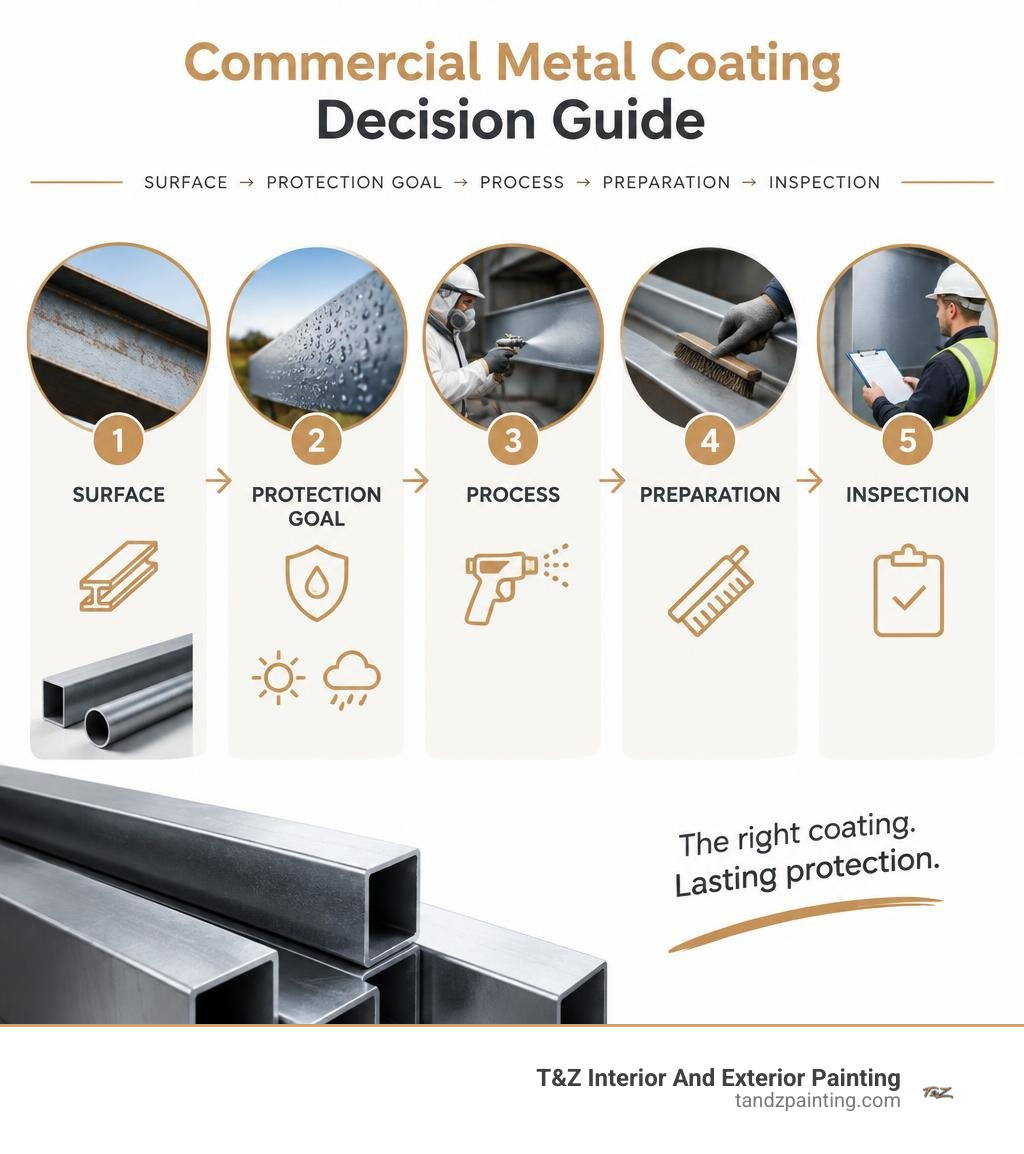
Helpful resources for commercial metal coatings:
Understanding Commercial Metal Spray Application Lombard: Technologies and Materials
Industrial metal assets face rigorous operational demands. Finding the right finish requires evaluating substrate materials, mechanical friction, exposure levels, and chemical contact. High-performance surface engineering relies on three core methods: thermal metallizing, dry film friction barriers, and spray-applied liquid polymers.
Thermal metallizing utilizes heat sources like electric arcs or oxy-fuel combustion to melt metal alloys, propelling microscopic droplets onto prepared surfaces. Meanwhile, solid film lubricants utilize resin matrices blended with molybdenum disulfide or PTFE to reduce friction where wet lubricants cannot survive. For architectural structures and facility equipment, elastomeric and polymer coatings create impermeable moisture barriers against corrosion.
Understanding flame spray coating processes and advanced liquid finishes helps facility managers determine which system aligns with their operational goals.
| Coating System | Key Materials | Primary Mechanism | Best Practical Use |
|---|---|---|---|
| Thermal / Flame Spray | Nickel-Chrome, Stainless Steel, Bronze | Mechanical bond of molten alloy droplets | Rebuilding worn machine shafts, severe erosion zones |
| Solid Film Lubricants | MoS2, Graphite, PTFE in resin matrix | Chemical / mechanical boundary layer | High-load friction reduction, extreme temperature parts |
| Specialty Commercial Spray | High-build Epoxies, Polyurethanes, Silicones | Cross-linked polymer moisture barrier | Structural steel, commercial roofs, architectural metal |
Core Coating Processes: Thermal Spray, Flame Spray, and Specialty Industrial Sprays
Thermal spray processes introduce alloy powders or wires into an intense heat zone. In combustion-based flame spraying, oxygen and fuel gases melt the material while compressed gas atomizes and projects particles at speeds approaching 100 feet per second. This process achieves deposit efficiencies near 65% and produces durable finishes ranging in hardness from Rc 20 to Rc 60.
Common thermal spray materials include:
- Nickel Chrome Silicon Boron: Delivers superior wear resistance and high-temperature oxidation protection.
- Stainless Steels & Carbon Steels: Used for component dimensional restoration and basic corrosion defense.
- Bronze Alloys: Applied to bearing journals and sliding contact faces to prevent galling.
- Solid Film Lubricants: Sprayed and cured to deliver dry lubricity under severe loads.
Investing in high-performance metal spraying ensures complex machinery withstands repetitive industrial friction without premature surface breakdown.
Comparing High-Performance Metal Spraying to Traditional Paint Systems
Standard brush-applied coatings struggle to match the durability required by industrial facilities. Exploring industrial spray painting and coating solutions highlights how automated and professional manual spray techniques achieve consistent dry film mil thickness across intricate profiles.
Specialized spray finishes offer several key performance benefits over conventional paint:
- Uniform Mil Thickness: Airless and HVLP sprayers lay continuous wet films that cure without brush marks, weak edges, or pinholes.
- Superior Interfacial Adhesion: High-velocity spray application drives coatings deep into mechanical surface profiles.
- Friction and Chemical Defense: Specialized formulations resist oils, hydraulic fluids, industrial cleaners, and high-wear abrasion.
Industry Applications Across Lombard, Addison, and Surrounding Areas
Commercial and light industrial facilities across DuPage County rely on protective coatings to maintain structural assets and precision equipment. Whether managing manufacturing centers or commercial real estate, selecting tailored finishes preserves asset value and performance across regional business corridors.
Facility managers exploring industrial spray solutions in Addison or updating commercial properties in Glen Ellyn, Oak Brook, and Itasca require solutions engineered for high durability.
Automotive, Off-Highway, and Industrial Component Standards
Component manufacturers and rebuilders in northern Illinois adhere to strict performance standards for critical metal hardware. Chassis parts, heavy equipment brackets, and hydraulic assemblies undergo automated or hand spray applications designed to eliminate metal-on-metal wear.
Sourcing through qualified industrial metal coating suppliers ensures coatings provide high lubricity, thermal stability, and EMI/RFI shielding across harsh industrial operating environments.
Commercial Metal Roofing and Architectural Metal Protection
Standing seam metal roofs, industrial siding, exterior decking, and structural steel beams face continuous exposure to Midwestern elements. Our commercial painting services focus on high-performance elastomeric, epoxy, and silicone systems that protect architectural metalwork from corrosion.
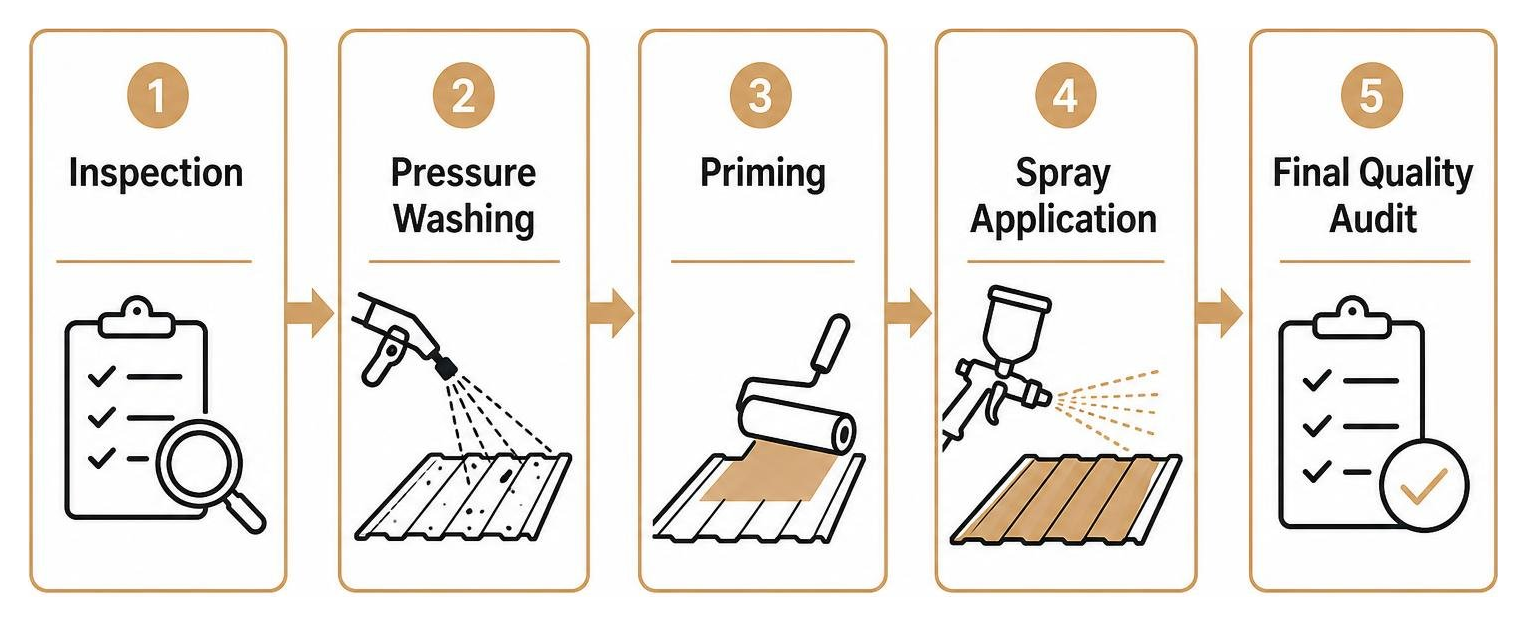
Elastomeric and high-solids silicone roof spray coatings seal structural fasteners, seams, and flashings while reflecting ultraviolet solar radiation. Delivering thorough metal protection against corrosion prevents rust formation, extends substrate longevity, and maintains clean commercial curb appeal.
Surface Preparation, Pretreatment, and Quality Standards
A protective coating performs only as well as the surface beneath it. Without thorough chemical cleaning and mechanical profiling, even advanced alloys and specialty polymers will suffer premature delamination. Professional contractors follow structured multi-stage surface preparation protocols before initiating spray operations.
Surface Pretreatment Essentials for Commercial Metal Spray Application Lombard
Successful metal finishing begins by stripping away mill scale, active corrosion, grease, and atmospheric soils. Proper execution of commercial metal spray application in Lombard requires matching the preparation technique directly to the metal substrate:
- Solvent & Alkaline Degreasing: Removes processing oils and hydrocarbon deposits to prevent contamination during profiling.
- Abrasive Grit Blasting: Uses angular media to etch bare steel, creating an anchor profile of 1.5 to 3.0 mils for mechanical bonding.
- Phosphate Pretreatment: Applies zinc or iron phosphate conversion layers to enhance corrosion resistance and promote polymer adhesion.
- Targeted Rust Conversion & Priming: Applying high-performance metal primers and rust conversion locks out moisture on structural renovations.
Understanding the principles of preparing metal for spray application ensures long-lasting adhesion across both factory machinery and architectural steel.
Quality Specifications, Military Standards, and Certifications
Precision manufacturing facilities in DuPage County often adhere to rigorous aerospace, automotive, and defense standards. Specialty coating operations are evaluated against strict international benchmarks:
- Nadcap & ISO 9001: Quality management accreditations ensuring traceable, standardized process controls.
- MIL-PRF-46010 & MIL-STD-171: Military performance standards governing dry film lubricants and finishing treatments.
- SAE AMS 2525 / 2526: Aerospace material specifications for bonded solid lubricant films.
- FMVSS 209 & OEM Specifications: Automotive compliance standards for critical chassis components and safety hardware.
- Empirical Quality Testing: Cross-hatch adhesion testing, dry film mil thickness verification, and ASTM B117 salt spray exposure chambers to validate corrosion resistance.
Project Timelines, Turnaround Planning, and Lombard Climate Considerations
Commercial coating projects throughout Lombard, Glen Ellyn, and Addison require careful scheduling around local environmental factors. Temperature, relative humidity, and regional codes directly impact application success and operational planning.
Local Weather Challenges and Climate-Specific Coatings in Lombard
The northern Illinois climate brings humid summers and freezing winter temperatures. Applying industrial liquid coatings during extreme humidity or below manufacturer dew point thresholds can trap moisture, resulting in poor adhesion or surface blushing.
Outdoor commercial projects perform best during stable weather windows between spring and autumn, when ambient temperatures remain steadily above 50°F. When managing facility maintenance and project waste, commercial properties must also observe local environmental guidelines:
- Licensed Waste Disposal: Partner with certified haulers for spent paint solids, chemical packaging, and sandblasting abrasive waste.
- VOC Compliance: Utilize low-VOC formulations compliant with Illinois Environmental Protection Agency (IEPA) standards.
- Overspray Mitigation: Implement physical containment barriers, negative air ventilation, and high-efficiency transfer equipment on commercial jobsites.
- Commercial Recycling Separation: Segregate unsoiled scrap metals and recyclable containers from landfill-destined refuse.
Project Timelines and Scheduling for Commercial Metal Spray Application Lombard
Project schedules and resource planning depend on several key technical requirements:
- Surface Profile Requirements: Heavily corroded steel requiring extensive mechanical blasting demands longer preparation timelines than new factory substrates.
- Access and Containment: Staging scissor lifts, negative-pressure containment curtains, or structural masking influences setup duration.
- Cure Schedules: High-performance two-component epoxies and moisture-cured polyurethanes require defined environmental curing windows before returning to service.
When planning facility upgrades, choosing a commercial painting professional ensures proper equipment staging and minimal disruption to daily business operations.
Frequently Asked Questions About Commercial Metal Spraying
How long do commercial metal spray coatings last in Lombard’s climate?
Specialized exterior elastomeric and high-solids silicone coatings applied to commercial metal roofs and structural facades typically deliver a service life of 10 to 20 years. Thermal spray metallized coatings on industrial components can endure decades of friction and mechanical wear when maintained under proper operating conditions.
What factors influence the scope of a commercial metal coating project?
Project scope depends on the existing substrate condition, required surface preparation, access accessibility, and the specific mil thickness specified for the coating system. A detailed site evaluation helps identify the right preparation and application approach for long-term performance.
How does surface preparation impact coating adhesion and warranty?
Surface preparation is the single most critical factor in coating longevity, accounting for the vast majority of coating performance. Inadequate cleaning or incorrect grit profiling leaves mill scale and contaminants that cause bubbling and delamination, voiding manufacturer warranties and leading to premature failure.
Conclusion
Protecting commercial metal surfaces against mechanical wear, chemical exposure, and Midwestern freeze-thaw cycles requires the right coating system and expert application. From factory machine components requiring thermal metallizing to commercial facilities needing elastomeric and specialty coatings, selecting an experienced partner ensures durable, long-term asset protection.
At T&Z Interior And Exterior Painting, our licensed and insured team brings over 15 years of expert craftsmanship, attention to detail, and a 5.0 Google Reviews rating to every commercial and residential project. We proudly serve businesses and homeowners throughout Lombard, Itasca, Addison, Glen Ellyn, Oak Brook, and surrounding communities with premium commercial painting, specialty finishes, and architectural surface solutions.
Contact our team today to discuss your property needs and schedule a consultation for our professional spray painting services.