
Why Choose Matt Black Paint for Walls: Benefits and Aesthetics
Matte black paint brings an understated elegance that high-sheen finishes simply cannot replicate. Because a flat or matte sheen reflects very little light (often under 5% gloss), it creates a velvety, non-reflective surface that feels cozy and intimate rather than cold or stark.
One of the standout functional advantages of this finish is light absorption. Glossier paints bounce light off every bump, seam, or drywall repair, putting surface flaws on display. In contrast, matte black absorbs surrounding light, effectively diffusing shadows. Homeowners discovering the advantages of low-sheen interior paint quickly see how effectively it softens small drywall dips and textures.
| Feature / Metric | Matte / Flat Black | Satin Black | Gloss / High-Gloss Black |
|---|---|---|---|
| Light Reflectivity | Very Low (0–5%) | Medium (25–35%) | High (70%+) |
| Hiding Power | Excellent (masks drywall bumps) | Moderate (shows minor flaws) | Low (highlights every flaw) |
| Visual Texture | Velvety, soft, non-glare | Smooth with a slight sheen | Mirror-like, reflective |
| Best Locations | Accent walls, bedrooms, theaters | Doors, trim, active hallways | Cabinets, specialty millwork |
| Touch-Up Blending | Seamless and invisible | Moderate blending difficulty | Challenging without recoating |
Beyond hiding minor surface quirks, matte black acts as a grounding anchor in modern interior design. It delivers a museum-quality backdrop that sharpens surrounding colors and highlights clean architectural lines.
Room-by-Room Applications of Matt Black Paint for Walls
- Powder Rooms: A compact powder room painted entirely in matte black creates an unexpected jewel-box effect. When paired with warm sconce lighting and brass plumbing fixtures, the small footprint feels intentional and luxurious.
- Bedrooms: Using matte black on a headboard wall creates a calming, restful environment. It visually recedes, adding cozy depth without competing with your bedding textures.
- Home Theaters and Media Rooms: Matte black on walls and ceilings eliminates annoying screen glare and light bounce, enhancing picture contrast for an authentic cinema experience.
- Dining Rooms: Designing an eye-catching accent wall in a dining area establishes a dramatic setting for dinner parties, especially beneath warm pendant lighting.
Complementary Palettes and Interior Design Styles
Matte black is remarkably adaptable, pairing seamlessly with organic and modern architectural elements:
- Natural Wood Tones: Warm white oak, walnut, and rich mahogany balance the deep pigment of the wall, preventing the room from feeling stark.
- Metallic Accents: Brushed brass, antique copper, and warm bronze pop cleanly against the non-reflective surface.
- Crisp Contrasting Trim: Off-white, soft cream, or light grey moldings provide crisp boundaries that frame dark feature walls.
- Textured Materials: Exposed brick, light linen drapery, bouclé fabrics, and woven jute rugs add tactile contrast.
When planning your overall scheme, exploring balanced ceiling and wall color combinations ensures that your dark walls harmonize naturally with upper room surfaces.
Selecting the Best Formulations and Sheens
Not all dark low-sheen paints perform the same. In the past, flat paints were difficult to wipe clean without leaving chalky burnish marks. Modern paint technology has changed that by combining flat aesthetics with durable resin binders.
When choosing a premium paint, look for:
- Zero-VOC or Low-VOC Formulations: These maintain indoor air quality while minimizing lingering odors during application.
- High Pigment Volume: Paints with rich pigment concentrations provide superior opacity, preventing streaks across wide wall spans.
- Class 1 Scrub Resistance: This rating ensures the paint film can handle gentle washing without losing its matte finish.
Leading paint manufacturers offer exceptional deep black shades. For example, Ben® Interior Acrylic Paint Matte Black combines an easy-to-apply acrylic formula with low-odor properties and strong hide. Similarly, Lick Black 01 Ultra Flat Matt delivers an ultra-flat 5% gloss level with moisture-resistant properties suitable for varying humidity levels.
Standard interior coverage averages 350 to 450 square feet per gallon. Investing in high-quality paints ensures you achieve reliable two-coat opacity rather than battling thin, uneven layers.
Essential Surface Preparation Checklist
Dark paint absorbs light, but it also casts subtle shadows along noticeable ridges, dried spackle edges, or unprimed drywall patches. Thorough prep work is essential before opening your paint can.
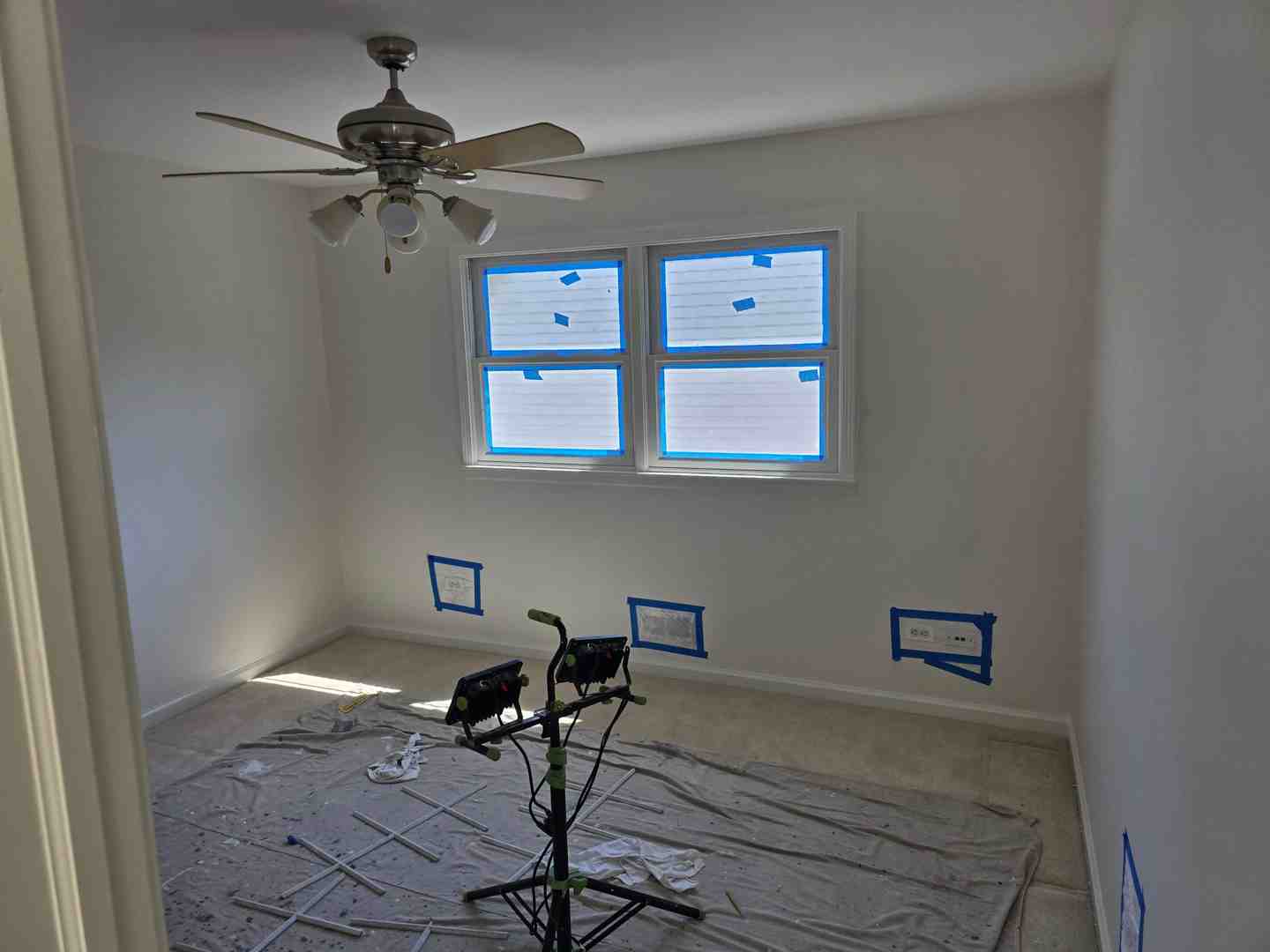
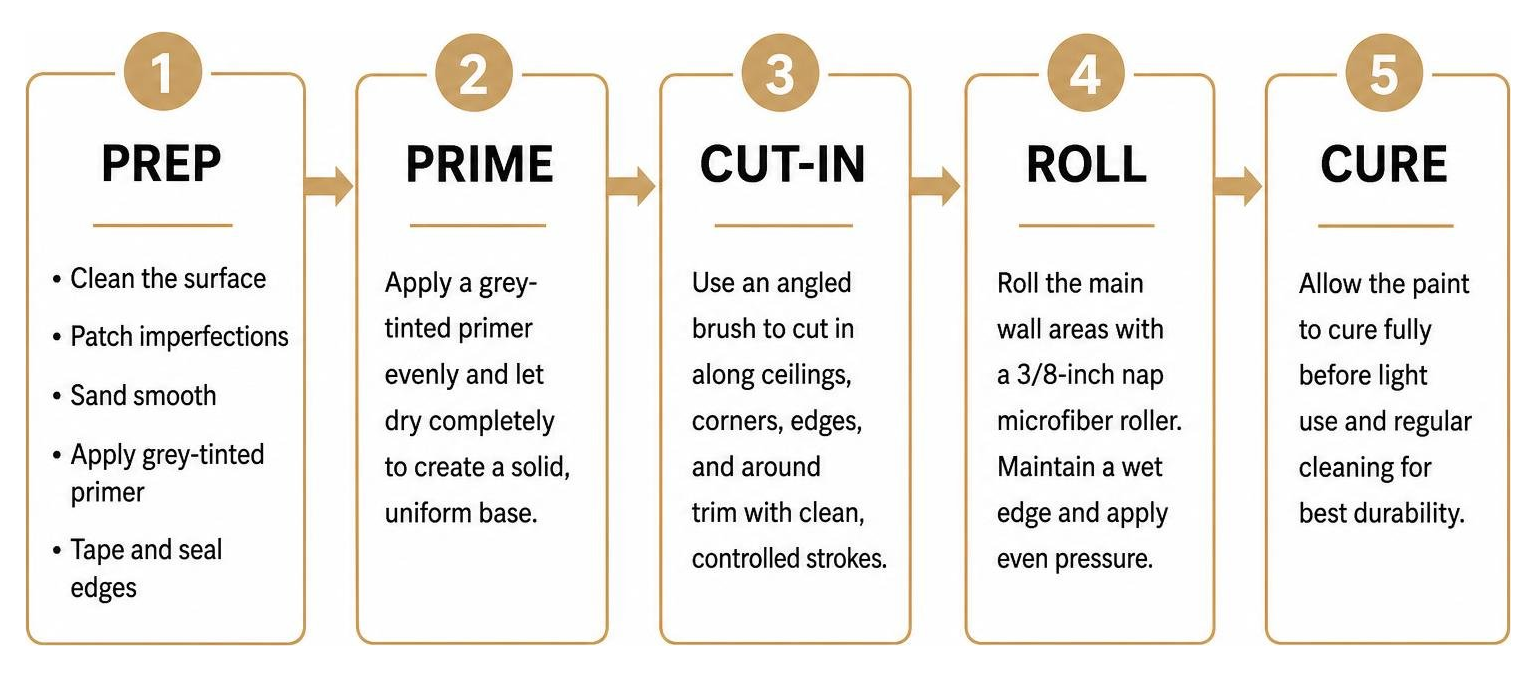
- Clean the Substrate: Wash walls with a mild detergent solution to remove grease, fingerprints, and dust. Let dry completely.
- Patch Every Imperfection: Fill nail holes, gouges, and hairline cracks with premium spackling compound. Feather edges smooth.
- Sand Flawlessly: Once dry, sand patched areas with 220-grit sandpaper until completely flush. Wipe away sanding dust with a damp microfiber cloth or tack cloth.
- Apply a Grey-Tinted Primer: Applying a dark grey primer over existing light paint creates a solid color base. Review our checklist on how to prepare a house for painting to ensure seamless base adhesion.
- Mask Edges with Precision: Apply premium low-tack painter’s tape along baseboards, ceiling junctions, and door casings. Seal tape edges by running a clean putty knife firmly along the edge to prevent paint bleed.
Professional Application Techniques for Dark Low-Sheen Surfaces
Applying dark matte paint requires consistent technique to avoid flashing or lap marks across large wall spans. While skilled professionals often utilize interior spray painting for expansive, uninterrupted finishes, rolling yields beautiful results when done with care.
Tools and Supplies Needed for Matt Black Paint for Walls
- Rollers: 3/8-inch nap shed-resistant microfiber roller sleeves for smooth drywall.
- Brushes: 2-inch to 2.5-inch angled synthetic sash brush for precise cutting-in.
- Paint Tray & Liners: Sturdy, wide-well roller tray.
- Painter’s Tape: Professional-grade, edge-treated masking tape.
- Drop Cloths: Heavyweight canvas drop cloths to protect flooring from drips.
- Stir Sticks & Pour Spout: To ensure pigments stay completely blended throughout the job.
Step-by-Step Painting Process and Lap Mark Prevention
- Stir Thoroughly: Deep pigments settle quickly. Stir the paint thoroughly from the bottom of the can before pouring.
- Cut-in One Wall at a Time: Paint a 2-to-3-inch border along the edges of the wall. Avoid cutting in the entire room hours ahead of rolling; working wall-by-wall keeps your cut line relatively fresh.
- Maintain a Wet Edge: Load your microfiber roller evenly without overloading it. Work in 3-foot by 3-foot sections, rolling in a continuous “W” pattern, then immediately fill in with vertical passes.
- Feather Roller Passes: Lightly roll back over wet edges without reloading paint to blend seams smoothly.
- Respect Dry Times: Wait the full 2 to 4 hours recommended by the manufacturer before applying a second coat. Applying paint over a tacky base can tear the curing film and cause patchy sheen spots.
Post-Painting Care, Cleaning, and Maintenance Checklist
- Allow Full Curing (30 Days): While the paint is dry to the touch in hours, it takes up to a month for acrylic resins to reach their full scrub-resistant hardness. Avoid hanging heavy frames or scrubbing the surface during this time.
- Routine Dusting: Use a clean, dry microfiber duster to remove surface dust weekly.
- Gentle Cleaning: If a smudge occurs, gently wipe the area using a soft microfiber cloth dampened with warm water and a few drops of mild dish soap. Never use abrasive scouring pads, harsh degreasers, or bleach.
- Blot, Don’t Scrub: Always blot or wipe with minimal pressure to prevent burnishing (creating shiny spots on the matte surface).
- Seamless Touch-Ups: If a deep scratch occurs, feather a tiny amount of original paint onto the spot using the tip of a soft artist brush or a small foam roller. Our guide on matte paint pros and cons details how easily low-sheen finishes blend during spot repairs.
Frequently Asked Questions About Matte Black Walls
Can matte black paint be used on ceilings or exterior surfaces?
Yes. On interior ceilings, flat black eliminates distracting glare and hides framing imperfections while creating a dramatic, cozy atmosphere. For outdoor applications like brick, siding, or masonry, choose a formula engineered for exterior use with built-in UV blockers and weather-resistant binders.
How do you prevent matte black paint from showing chalky marks or burnishing?
Select a high-grade, washable matte paint designed with advanced acrylic resins. Avoid heavy scrubbing; instead, clean gently with a damp microfiber cloth. In high-traffic hallways, keeping furniture slightly off the wall prevents friction rub marks.
How many coats of matte black paint are necessary for full coverage?
Plan on two full coats over a grey-tinted primer. While some ultra-pigmented paints boast one-coat hide, two thin, uniform coats ensure complete light absorption, deep color richness, and long-term durability.
Conclusion
Matte black walls bring architectural sophistication, dramatic depth, and cozy visual warmth to any interior space. By carefully preparing your drywall, applying a quality dark primer, and maintaining consistent rolling technique, you can achieve a velvety, streak-free finish that elevates your entire home.
At T&Z Interior And Exterior Painting, our experienced team brings over 15 years of dedicated craftsmanship, clean job sites, and 5.0-star service to every project. Whether you are updating a living room in Lombard, adding a feature wall in Glen Ellyn, or redesigning a powder room in Oak Brook, we have the expertise to make your vision a reality. Contact us today to schedule professional interior painting services and transform your home’s walls.